Student Voices

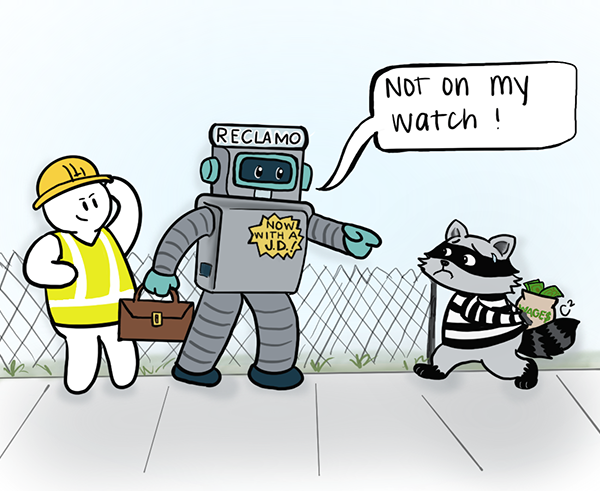
Cartoon depicting a Reclamo robot protecting a worker from a robber stealing worker wages

AI: Defender of Wage Theft Victims (and Access to Justice)

Can AI be the superhero in wage recovery efforts? This “Student Voices” post illustrates the widespread wage theft problem in the U.S. juxtaposed with equally widespread indifference on the part of law enforcement, federal government, and other stakeholders.
The gap leaves room for technology and AI tools to be part of the triage picture.

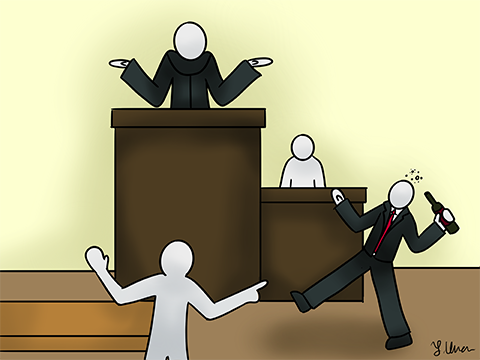
Cartoon depicting a drunk attorney representing a client, with the judge shrugging it off

Drunk, Asleep, or Silent: Ineffective Assistance of Counsel in Capital Cases

Ineffective assistance of counsel counts among its more egregious causes lack of preparation, sleeping through trial, and drunkenness. So, what is the legal standard for this incompetence? This “Student Voices” bonus blog examines the Supreme Court’s Strickland and Cronic decisions, their application in capital cases, and potential reforms to provide a more just process for defendants.

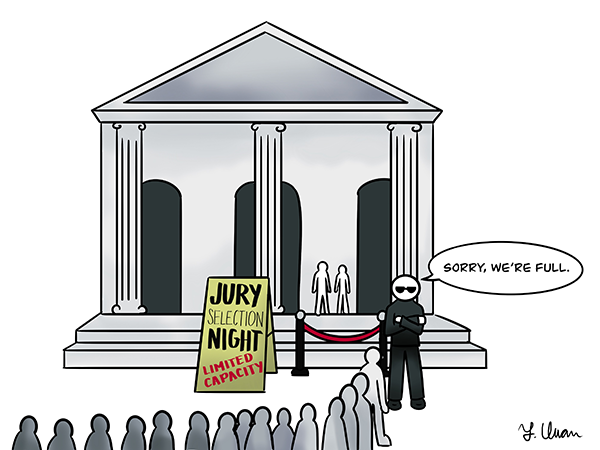
Cartoon depicting a line of potential jurors outside a courthouse with a sign saying the jury selection is at capacity (but only two jurors selected)

Randomizing Reforms to Ensure the Right to an Impartial Jury

The Sixth Amendment right to an impartial jury—particularly for Black defendants facing disproportionately white juries—isn’t always a guarantee. This “Student Voices” blog proposes three reforms to be randomized and studied in real courts, rather than assuming they work, to mitigate possible implicit racial bias in juries.

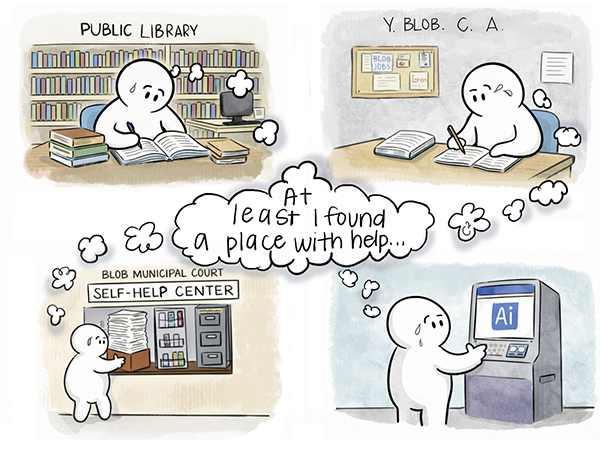
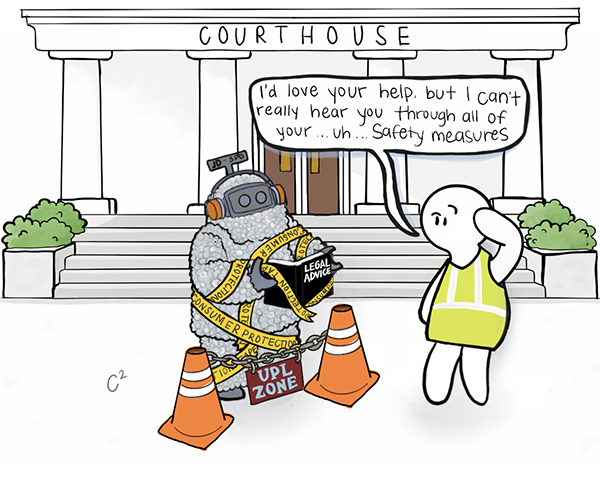
Cartoon depicting a pro se litigant seeking help from AI, but AI is literally tied up in caution tape from UPL regulations

Is UPL Targeting AI to Protect Consumers or Protect Lawyers?

Law could use a tool like AI to bridge the accessibility gap between practitioners and the pro se litigants attempting to navigate the legal field. In this second post in a two-part series on AI and the unauthorized practice of law (UPL), HLS student Elizabeth Guo outlines six points of argument in favor of AI and against UPL as the tool to regulate AI in legal practice.

Cartoon depicting a sign pointing up a long path to Court (10-hour line) vs a sign pointing to a desk with a robot indicating a 5-minute AI decision

Brazil’s AI-Driven Courts: Innovation Without Evaluation

To tackle one of the world’s largest backlog of cases awaiting judicial decisions, Brazil’s courts are relying on AI systems to prioritize cases, support legal research, and even draft judicial decisions. The change in process may help address cases much quicker but at what cost? Largely untested in the justice system, AI’s impact deserves rigorous evaluation before deploying it in real-world situations.

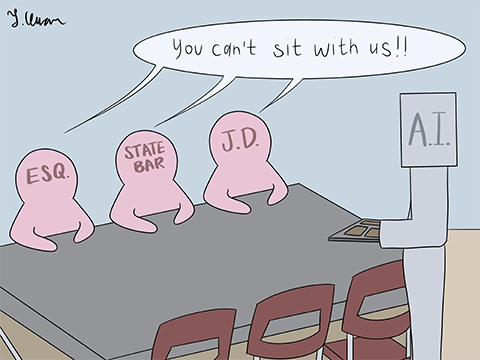
Cartoon depicting AI as a robot not allowed to sit at the lunch table with the lawyers, J.D. candidates, and bar associations.

How Can General-Purpose AI Withstand UPL Scrutiny?

In the first of a two-part series on AI and the Unauthorized Practice of Law (UPL), HLS J.D. candidate Elizabeth Guo explores current UPL rules, the challenging definition of “practice of law”, and the reasons why general-purpose AI tools will not likely be tested by UPL rules when it comes to providing legal information.

Cartoon depicting the bar as autos being allowed through an intersection in which a truck labeled as an auto club must stop.

Collision Course: How the Bar Drove Auto Clubs Out of Court

A Depression-era legal battle between the bar association and auto clubs like AAA pitted the financial interests of lawyers against those of consumers. When the bar won, it not only set forth a future of legal reform controlled by courts rather than lawmakers, it also laid the groundwork for a hundred years of access-to-justice issues that continue to plague the legal profession.

Cartoon depicting Upsolve in jail without a way to communicate while New York courts stand tall with a megaphone in hand

Inside Upsolve’s Legal Fight for Justice Advocacy

Upsolve is a New York nonprofit attempting to create a program in which non-lawyers give limited legal advice to low- income people in debt collection litigation. The organization would be a boon in helping the roughly 80 percent of defendants failing to appear in debt collection court. The only thing standing in its way? New York’s Unauthorized Practice of Law (UPL) statute. HLS student Ashil Jhaveri charts a legal argument based on UPL’s unconstitutionality that could hopefully move the organization forward.

Cartoon depicting a police officer taking the shirt off of an individual's back and declaring that it was used in a crime.

Civil Forfeiture’s Access to Justice Problem

File this one under “historic laws in need of modernizing.” Civil forfeiture—the act of seizing and forfeiting physical property, regardless of whether an individual has been charged with a crime — has its roots in customs and piracy cases. But today, in addition to serving as a tool to pad police department’s budgets, it more often keeps cars, cash, and possessions out of the hands of potentially innocent individuals with no guarantee of legal representation. The result is an access to justice failure, as reported by HLS student Joe Liberman in this week’s “Student Voices” blog and podcast episode.

Scroll to Top