

By Andrew Garcia, J.D. candidate, Harvard Law School
STUDENT VOICES: The views expressed below are those of the student author and do not necessarily reflect the position of the Access to Justice Lab.
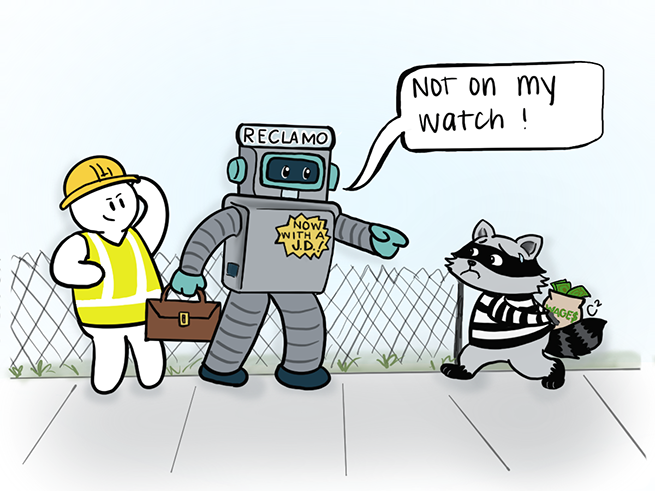
Wage theft is the unlawful failure to pay workers the pay and benefits they are due. In 2017, two researchers investigated minimum wage violations, one form of wage theft, and found that in the 10 most populous states, 17% of eligible low-wage workers reported receiving less than the minimum wage, amounting to 2.4 million workers losing $8 billion annually. Extrapolating from those states, Cooper and Kroeger estimate that workers throughout the country lose $15 billion annually from minimum wage violations alone.
Recovery efforts fall short of workers’ recovery needs. A 2024 Economic Policy Institute report identifies more than $1.5 billion in stolen wages recovered for workers between 2021 and 2023 through federal, state, and local efforts. The report identifies seven forms of wage theft including violations relating to minimum wage, overtime, off-the-clock work, meal breaks, illegal deductions, tipped minimum wage, and worker misclassifications. In comparison, the Federal Bureau of Investigation reports robberies accounted for $598 million in losses in 2018 and $482 million in losses in 2019.
Consider a personal anecdote from my time as Executive Director of El Centro Del Inmigrante, a day laborer worker’s center in New York City. El Centro maintains a working relationship with the local district attorney’s office, which sends wage theft investigators to the worker’s center once a month to support wage claims with the full weight of that office’s authority. The investigators’ advocacy included offering to train the local precinct on the prevalence of wage theft and on how officers could support the district attorney’s enforcement efforts. The police chief welcomed the assistant district attorneys and expressed appreciation for their time but questioned why law enforcement officers needed to understand conduct that “is not illegal.”
Wage theft is often regarded as a poor person’s problem despite its broad reach. When law enforcement, the federal government and other stakeholders turn a blind or indifferent eye to wage theft, one must wonder what will advance reform efforts. A recent example of a state-level initiative to reclassify wage theft as a criminal offense and escalate enforcement accordingly leverages state authority and may reflect a shift in public opinion. When the public remains unaware of wage theft and of workers’ rights to file wage theft claims against violating employers, AI tools may make legal remedies more accessible.
Wage Theft Climate, Then and Now
Civil legal aid, as currently structured, began as a response to rampant wage theft. In the New York City seaports of 1876, German advocates pioneered the first legal aid organization to support German immigrant sailors in recovering stolen wages from their employers. Given the attitudes of the second Trump Administration, undocumented immigrants face a marked rise in wage theft and workplace abuse and heightened fear that discourages pursuit of court claims. Despite its high incidence in low-wage and immigrant workers, the U.S. Department of Labor finds that wage theft occurs in all industries and impacts workers at all income levels. The scope of wage theft suggests a need for greater access to recovery mechanisms.
The Sisyphean struggle of early legal aid leaders resembles current conditions in civil legal aid. The fledgling legal aid movement did not become nationally recognized until 1911 and did not receive federal funding until 1965. Further institutional legitimacy had to wait until 1974 with the federal creation of Legal Services Corporation (“LSC”). In 2025, President Trump proposed to reduce the LSC budget, the nation’s single largest funder of civil legal aid, by 96%, from $560 million the year prior to $21 million for FY 2026. The LSC estimates that it meets fewer than one-fifth of poor people’s legal needs. “In a world of scarcity, legislatures, courts, and legal-aid organizations need flexibility to triage cases.” Technology and AI tools must be part of the triage picture.
Wage Recovery AI Tools
AI tools are well suited to address unmet wage recovery needs by narrowing the gap between workers and their lawful wages. One such platform based in New York City facilitates connections between workers and available wage-recovery mechanisms. Reclamo AI, like the German Legal Aid Society, began as a tool dedicated to supporting immigrants who pursue wage theft claims. Launched in 2022, the chatbot helps New York City workers and non-lawyers navigate applicable city, state and federal wage-and-hour laws, assesses the viability of workers’ claims, and connects those workers with legal aid lawyers and workplace advocates for additional assistance.
Workers can access the Reclamo chatbot directly on the website via desktop or smartphone browsers or through WhatsApp. Users converse with the ragbot by following a series of guiding prompts. In its early years, El Centro workers piloted the AI tool’s comprehensive intake and received populated demand letters, complaint forms for state and federal departments of labor, and sample legal complaints to file in court. Realizing that intake can demand hours of time and that a worker, without support, may find the process overwhelming, the Reclamo team made the bot more succinct, more protective of user information and more connected with local service providers.
Reclamo AI now responds with empathy and offers a concise assessment of the user’s requests, titrating information and forms in a digestible way. The bot processes user inputs by redacting personally identifying information and assessing claim-specific information against a matrix of attorney-provided legal responses to the most frequent questions asked in Wage & Hour disputes. Workers can still receive sample demand letters, legal complaint templates, and instructions on how to file complaints with labor officials from Reclamo, but the user must affirmatively request the materials. Should the worker want assistance from a human professional, the worker may provide a zip code to receive a list of local legal aid service providers and workplace advocates. The bot can send legal aid providers a warm referral with all information covered by attorney-client confidentiality at the intake stage. Attorneys can then follow up with the worker directly. As of December 2025, Reclamo AI is available in over 50 languages across all employment law areas.
Reclamo is an initiative by Pro Bono Net’s Justicia Lab, in partnership with the New York Legal Assistance Group. The intervention is timely. Since its launch, Reclamo AI has been used to file over $1.5 million in wage theft claims on behalf of workers. Despite the tool’s utility, wage recovery mechanisms continue to fall short of meeting demand.
With the rise of AI platforms, the coming years may clarify the legal boundaries of their efficacy. Legal access tools such as LegalZoom have focused attention on the unauthorized practice of law (“UPL”). Information-generative tools such as Reclamo AI appear to find themselves on the right side of the opaque divide, but the emphasis on UPL may obscure the equally important question of whom the restriction is meant to protect. Wage theft AI platforms may offer advocates an opportunity to test those legal boundaries and further democratize access to wage recovery mechanisms. In 1934, the Legal Aid Society, through its prolific wage theft litigation, successfully advocated for legislation creating the Small Claims Court. Today, Wage & Hour advocacy must contemplate reimagining traditional methods and creating new ones.
If you’re interested in more on this topic, listen to our Proof Over Precedent podcast episode.