

What is the Access to Justice (A2J) Lab?
The A2J Lab is a research center at Harvard Law School that runs rigorous empirical studies—primarily randomized control trials (RCTs)—to learn what works (and what doesn’t) in improving access to justice and court administration.
What is a randomized control trial (RCT) in law?
In an RCT, cases or participants are randomly assigned to different interventions (for example, new services or programs) versus the usual approach. The randomization lets us see whether the intervention causes better outcomes, rather than just appearing to be associated with them.
What kind of projects does the A2J Lab work on?
We study interventions across areas such as:
- Civil legal services and self-help
- Criminal justice and defense models
- Housing, employment, financial wellbeing, and other socio-economic outcomes
- Court-based reforms
- Algorithms and AI in legal services
- Familial relationships and the systems that affect them
What is the mission of the A2J Lab?
We aim to make law an evidence-based profession by:
- Testing legal and court interventions using RCTs and other methods
- Sharing results with courts, policymakers, and practitioners
- Training current and future leaders in empirical approaches to law
Who leads the A2J Lab?
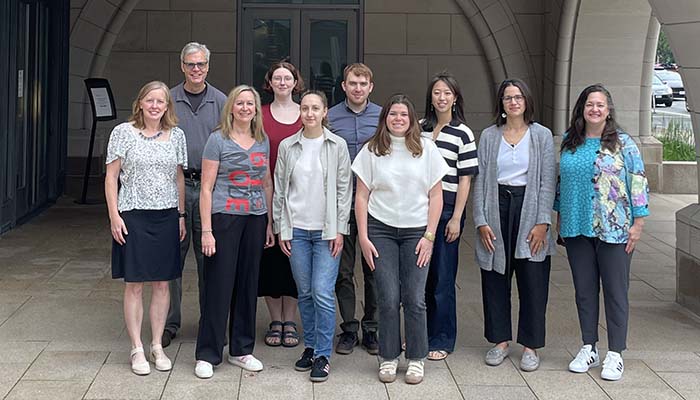
Faculty Director D. James (Jim) Greiner, the Honorable S. William Green Professor of Public Law at Harvard Law Schoo leads a multidisciplinary team that includes lawyers, researchers, data analysts, and staff with expertise in empirical methods, statistics, and access-to-justice issues.
Where is the A2J Lab located?
Access to Justice Lab
Harvard Law School
1607 Massachusetts Ave.
Cambridge, MA 02138

We also have an online presence through LinkedIn, Facebook, Bluesky, Instagram, etc. You can also reach us via the Contact Us link.
How can I be featured in your PROOF OVER PRECEDENT™ podcast?
We love legal work but please don’t request features on your all-star attorney. We’re more interested in featuring content related to evidence-based research in law (or perhaps a different subject area in which we could draw parallel themes). Typically, that empirical research supports access to justice and, therefore, our mission. If you have relevant content to share, please fill out the Contact Us form.
How does the Lab address privacy, ethics, and consent in its studies?
All A2J Lab studies comply with applicable ethical, legal, and institutional requirements, which invariably include review by an Institutional Review Board (IRB) or comparable body. We work closely with our partners to:
- Protect participant confidentiality and data security
- Obtain appropriate consent where required
- Ensure that randomized designs are ethically justified and compliant with jurisdiction-specific rules and court orders
Do you provide legal help to individuals?
No. The A2J Lab does not give legal advice or represent clients. We are a research center that partners with courts and legal services organizations. If you need legal help, please contact a lawyer or legal aid organization in your area.
How can my court or organization partner with the Lab?
Courts, legal services providers, pro bono programs, academic researchers and research centers, and community organizations can reach out through the Connect With Us or Contact Us links. Briefly describe your organization, the issue or process you want to improve, and any existing or proposed intervention.
Does the A2J Lab work outside the United States?
The Lab’s primary focus is on the U.S. legal system, though we have initiated some work outside the U.S. Some of our work, collaborations, and methods may be of interest or adapted to other jurisdictions. International partners interested in collaborating on randomized evaluations or empirical projects are welcome to contact us to explore possibilities.
How can I access your findings and resources?
You can find:
- Publications under Publications
- Practitioner summaries and tools under Resources
- Prior RCTs in Law and OSF registrations via the Resources/Projects pages
These materials are intended to help inform policy, program design, and practice.
Can we use A2J Lab findings in our court, program, or policy work?
Yes. One of the Lab’s goals is to provide usable, evidence-based guidance for courts, policymakers, legal service providers, and other practitioners.We encourage you to:
- Cite A2J Lab publications and practitioner summaries in your reports, rule-change proposals, and program designs
- Contact the Lab if you have questions about applying particular findings or if you are considering adapting an intervention tested in a specific jurisdiction
Please follow any citation guidance in the specific publication you are using.
How is the A2J Lab funded, and can I donate?
The Lab receives grants and donations from governments, individuals, private foundations, and other organizations. To support our work, use the Donate link in the main navigation.
How can I stay updated on A2J Lab news and information?
- Subscribe to our newsletter
- Follow us on social media (links in the footer)
- Subscribe to PROOF OVER PRECEDENT™ wherever you get your podcasts
- Subscribe to our content via Substack (for free)
- Visit our Blog and Podcast pages for updates and discussions of ongoing work