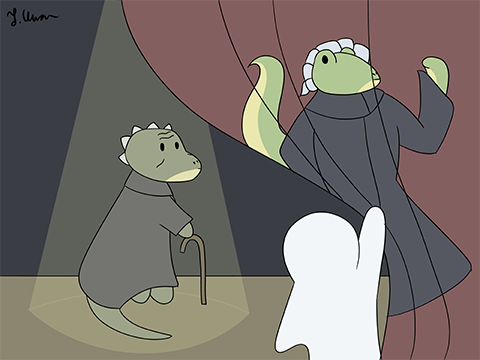
Cartoon depicting "Blob" moving a stage curtain with a picture of a confident judge and seeing the actual judge behind the curtain looking concerned.

Why ‘Active Judging’ Isn’t Working (Yet) 

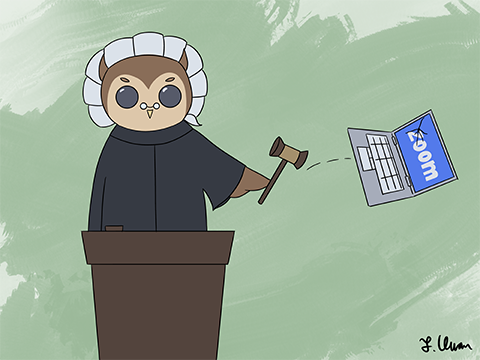
One approach to supporting pro se litigants in civil court (a whopping 76 percent of cases!) is to embrace “active judging”—the practice of judges relaxing formal procedures and explaining legal processes. Only problem is that judges, while open to the idea in theory, seem to have trouble relinquishing control of the complexity built into the current adversarial system. Maybe the onus should fall not on individual judges to enact change but on structural reforms spread throughout the various steps of litigation.

Cartoon depicting a prison inmate at a track, where a judge asks "Here for the PRLA-thon?" and requiring a $450 entry fee and hurdles labeled "injury requirement", "money payment", and "exhaustion."

Time for Change to Prisoners’ Rights Advocacy

The Prison Litigation Reform Act (PLRA) was signed in 1996 as a way of limiting frivolous lawsuits in federal court stemming from prisoners over such egregious civil rights violations as serving crunchy (versus smooth) peanut butter in prisons. It was never intended to harm the reasonable civil rights of prisoners. But 30 years later, criticism from human rights advocates persist while prisoners continue to face procedural and financial hurdles just to have their (often very reasonable) lawsuits even looked at by a judge. In this “Student Voices” blog, Spencer Thieme offers suggestions both on rigorous testing and updating data to make a more compelling case for legislative change.

Cartoon depicting ants triaging wounded ants while a judge dictates how medical cases will be prioritized

“Lawyers for Everyone!”: What Could Go Wrong?

Applying Gideon—the criminal right to counsel—to civil cases seems like a logical step in attaining better access to justice for everyone. So why are three heavy hitters in the access to justice space speaking out against the push for civil Gideon? The reason has to do with expansion and dilution of a limited resource.

Unaccompanied Immigrant Minors–Poster Children for the Access to Justice Gap

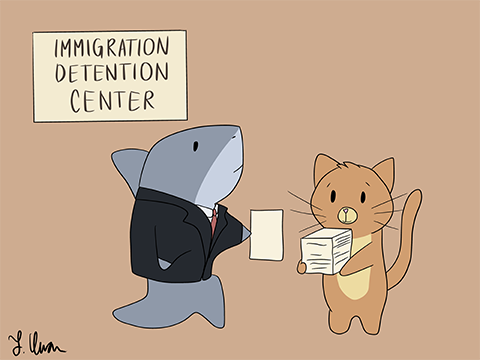
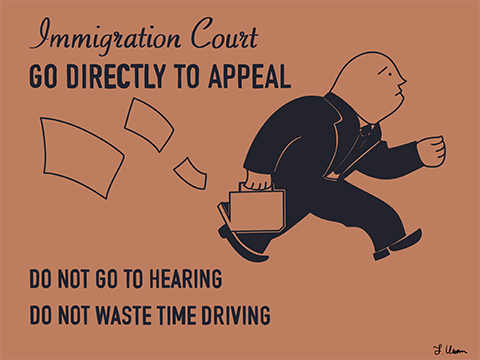
Recent immigration proceedings have exposed the particularly vulnerable position that unaccompanied immigrant children face in court. Heavily dependent on federally funded legal aid, their access to legal representation is challenging at best, doomed at worst. This week, we bring you a “Student Voices” blog that examines the current immigration court environment–hostile to reliance on federal support–and looks at alternative paths for funding and legal right to counsel going forward.

Cartoon depicting an individual counting the days behind bars while a prosecutor is buried under paperwork

How Overburdened Prosecutors Harm Defendants

Public defenders aren’t the only ones burdened by excessive caseloads. Prosecutors also face widespread high-volume workloads, and the result can mean delays, weak-case backlogs, overlooked alternative, and unintentional Brady violations. This bonus “Student Voices” blog proposes reforms such as randomized controlled trial research and data-informed case screening.

Cartoon depicting both worker unions and worker centers as ballerinas. The "union" ballerina asks the "worker center" ballerina how she got so flexible.

Worker Centers Build Collective Worker Power

Labor unions, known for advancing workers’ rights, are limited by the National Labor Relations Act and whom they represent. This scope typically excludes low-wage workers–namely, immigrants and gig workers–from unionization support. So where have these excluded workers found access to justice in the form of legal support and collective action organization? Community-based worker centers.

Cartoon depicting Blob accessing AI legal help from various publicly accessible locations--library, municipal court self-help center, community centers, and 'AI terminals'.

Distribution, Not Just Design: Rethinking Access to AI Legal Help

To make AI legal help truly accessible requires less focus on the AI tools themselves and more focus on the distribution channels where people will use them. Libraries, court self-help centers, community institutions, and kiosks all bring accessibility-related challenges from privacy, workflow support, and overreliance. This “Student Voices” post argues for AI literacy support, as well as improved policy standards and more funding, to help those who need legal AI help the most.

Cartoon depicting a scale measuring the Law Enforcement Officer Bill of Rights, with public accountability being outweighed by police protections.

LEOBR-oken? Barriers to Justice in the Law Enforcement Officer Bill of Rights

Do increased procedural protections for police officers undercut access to justice? Are citizens less likely to be able to hold police officers accountable for misconduct under the Law Enforcement Bill of Rights (LEOBR)? This potential conflict constitutes this week’s bonus post, which examines the history and efficacy of LEOBR while also proposing a randomized controlled trial to study both the perceived fairness and actual fairness of LEOBR.

Cartoon depicting a Reclamo robot protecting a worker from a robber stealing worker wages

AI: Defender of Wage Theft Victims (and Access to Justice)

Can AI be the superhero in wage recovery efforts? This “Student Voices” post illustrates the widespread wage theft problem in the U.S. juxtaposed with equally widespread indifference on the part of law enforcement, federal government, and other stakeholders.
The gap leaves room for technology and AI tools to be part of the triage picture.

Cartoon depicting the aftermath of an expungement party in which the individual does not feel better after obtaining an expungement order

The Expungement Experiment: Housing and Happiness Outcomes

In this third post about the Final Stage Reentry Project, we focus on the impact expungement has on housing and on identity and overall life satisfaction. Despite our hypothesis that a clear record would clear the way for housing and happiness, expungement once again had no impact. We dig into these results and the potential reasons for the findings.

Scroll to Top