Criminal Justice

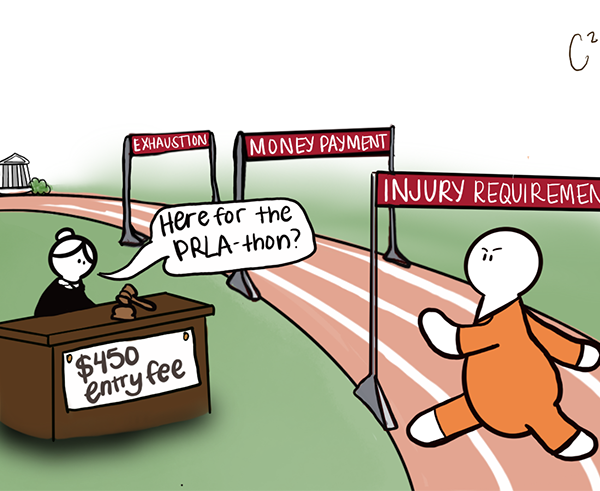
Cartoon depicting the aftermath of an expungement party in which the individual does not feel better after obtaining an expungement order

The Expungement Experiment: Housing and Happiness Outcomes

In this third post about the Final Stage Reentry Project, we focus on the impact expungement has on housing and on identity and overall life satisfaction. Despite our hypothesis that a clear record would clear the way for housing and happiness, expungement once again had no impact. We dig into these results and the potential reasons for the findings.

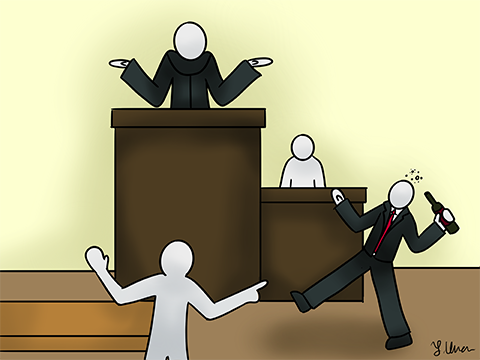
Cartoon depicting a drunk attorney representing a client, with the judge shrugging it off

Drunk, Asleep, or Silent: Ineffective Assistance of Counsel in Capital Cases

Ineffective assistance of counsel counts among its more egregious causes lack of preparation, sleeping through trial, and drunkenness. So, what is the legal standard for this incompetence? This “Student Voices” bonus blog examines the Supreme Court’s Strickland and Cronic decisions, their application in capital cases, and potential reforms to provide a more just process for defendants.

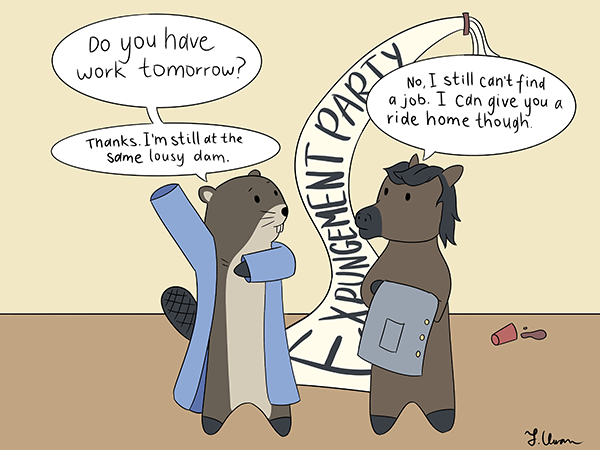
Cartoon depicting two individuals at an expungement party discussing how one can't find a job and the other is dissatisfied at the same job.

The Expungement Experiment: Impact on Employment

Criminal record clearing may help individuals attain jobs, housing, and life satisfaction, according to many criminal justice system reformers. This week, we look at the A2J Lab’s long-running expungement study and the impact of record clearing on employment–a reason 84 percent of our study participants cited for wanting an expungement. The results surprised researchers and clarified policy needs for effective expungement outcomes.

Cartoon depicting an "expungement party" with a blindfolded donkey playing "pin the expungement", showing the challenges associated with obtaining an expungement

The Expungement Experiment: Effectiveness of Legal Aid 

Would-be criminal justice system reformers have long believed that a criminal record inhibits the search for secure employment, housing, and life happiness, and those problems in turn lead to increased recidivism. For reformers, the answer to these challenges has been some kind of criminal justice record clearing. But that theory has only some evidence to support it. In this first of three posts, the A2J Lab dives into its long-running randomized controlled trial in Kansas studying expungement’s impact on reentry outcomes.

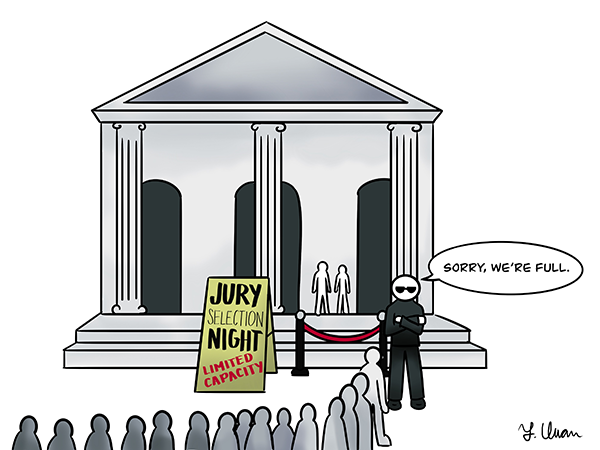
Cartoon depicting a line of potential jurors outside a courthouse with a sign saying the jury selection is at capacity (but only two jurors selected)

Randomizing Reforms to Ensure the Right to an Impartial Jury

The Sixth Amendment right to an impartial jury—particularly for Black defendants facing disproportionately white juries—isn’t always a guarantee. This “Student Voices” blog proposes three reforms to be randomized and studied in real courts, rather than assuming they work, to mitigate possible implicit racial bias in juries.

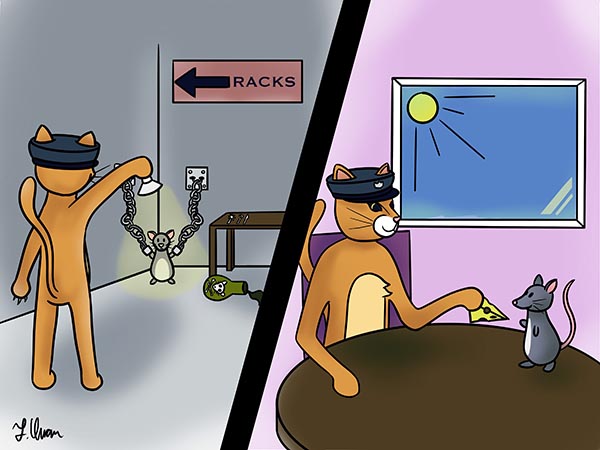
Cartoon depicting a police officer as a cat shining a light on a mouse chained in a room vs. cat in a window-lit room giving a mouse a piece of cheese at a table.

Environments of Justice: Reimagining Interrogation Rooms

In this episode of Proof Over Precedent, HLS student Spencer Thieme discusses interrogation rooms and the effect of a physical environment on stress, memory, disclosure, and false confessions. She also considers potential randomized controlled trials for studying interrogation room design.

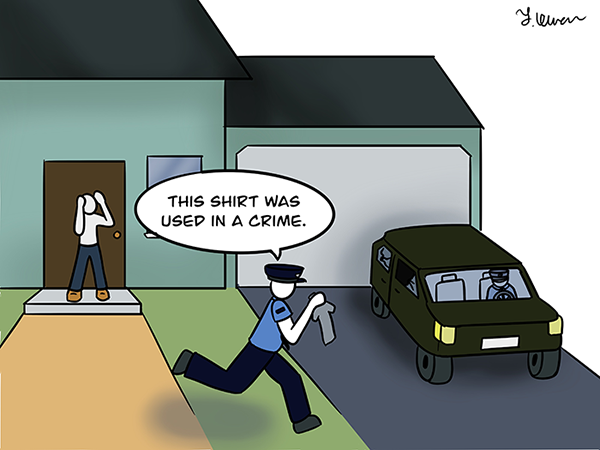
Cartoon depicting a police officer taking the shirt off of an individual's back and declaring that it was used in a crime.

Civil Forfeiture’s Access to Justice Problem

File this one under “historic laws in need of modernizing.” Civil forfeiture—the act of seizing and forfeiting physical property, regardless of whether an individual has been charged with a crime — has its roots in customs and piracy cases. But today, in addition to serving as a tool to pad police department’s budgets, it more often keeps cars, cash, and possessions out of the hands of potentially innocent individuals with no guarantee of legal representation. The result is an access to justice failure, as reported by HLS student Joe Liberman in this week’s “Student Voices” blog and podcast episode.

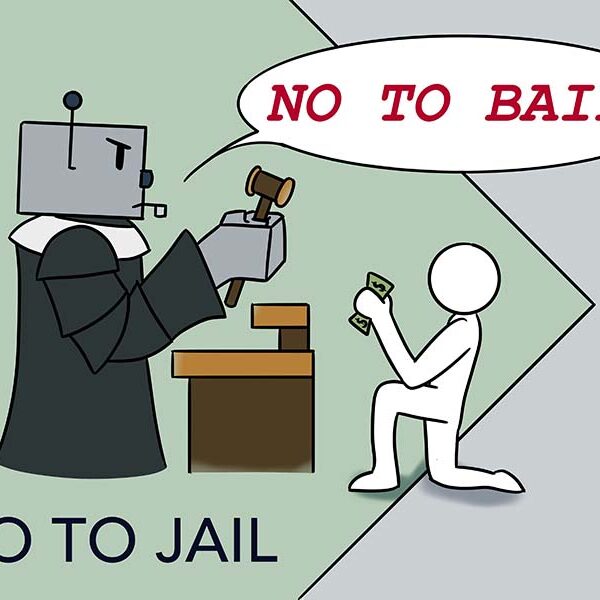
Cartoon depicts individual begging for cash bail to a robot judge who is refusing it

The ‘Robopocalypse’ Fallacy: Lessons from California on Ending Cash Bail

“Replacing cash bail: Fairer justice or robopocalypse?” This headline from a 2020 California news article encapsulates the rhetoric at the time surrounding Proposition 25, a California referendum to eliminate cash bail and provide judges making pretrial release decisions with a risk assessment instrument.

The association of ending cash bail with algorithmic decision-making embodies a complexity that members of the bail reform movement everywhere can examine in future efforts to bring greater access to justice for pretrial detainees.

Cartoon depicts individual not being invited to an expungement party

Can Data-Driven Policy Shape Expungement Uptake?

What if thousands, perhaps millions, of people could stop their past—their criminal record, that is—from following them in job interviews and housing applications? What if some barriers to record clearing could be improved by policy, and not by an individual’s circumstances? Would that improve uptake in expungement? A 2025 article in the North Dakota Law Review addresses the possibilities by examining the current state of record clearing in Pennsylvania and Kansas and potential policy reforms in both states that would produce the greatest number of eligible records for clearing. 

Cartoon depicting an individual seeking information on an arresting officer's badge number for a former offense, with the police captain noting that the officer no longer works there

Record Clearing as a “Rite of Passage”: What Kansas Expungement Reveals About Access to Justice 

Criminal record clearing has become a prominent policy tool for improving individuals’ employment, housing, and reentry outcomes. However, too often, eligibility does not translate into actual access or successful uptake. But why?  A look at the trials and tribulations of the expungement process in Kansas offers insight into the design of criminal law institutions as a whole.

Scroll to Top