

By Joe Liberman, J.D. candidate, Harvard Law School
STUDENT VOICES: The views expressed below are those of the student author and do not necessarily reflect the position of the Access to Justice
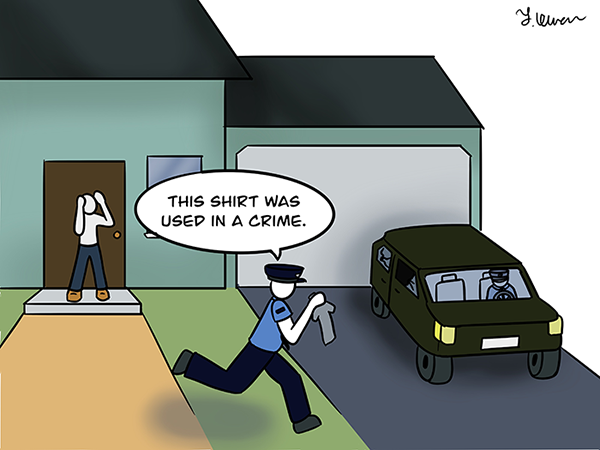
Halima Culley’s son was driving her car when law enforcement pulled him over and arrested him on minor drug charges. The State of Alabama seized Ms. Culley’s car and sought to have it permanently forfeited—despite her having not committed or assisted with the crime. Ms. Culley prevailed, but she was without her car for the twenty-month duration of her case.
Ms. Culley’s story is emblematic of the problems the practice of civil forfeiture poses. In many states, civil forfeiture lets a law enforcement agency seize and keep property that it believes was used to commit or facilitate a crime or was purchased with the proceeds of a crime. The owner need not have committed or (in some states) even known about the crime. In at least some states, most forfeitures go unchallenged, raising questions about seemingly falling short of the Fifth and Fourteenth Amendment guarantees that one cannot be “deprived of . . . property without due process of law.”
Civil forfeitures are a widespread police practice at both the state and federal level. Every year, governments use civil forfeiture to seize billions of dollars in property, mostly in small dollar amounts. But despite its ostensible criminal nexus, civil forfeiture proceeds without a right to appointed counsel for the person fighting not to be deprived of their property. Unsurprisingly, this practice poses access to justice issues. Some states are attempting reform, but the area is ripe for further study as states endeavor to reign in the practice and bolster procedures designed to protect those whose property is on the line.
What Are the Origins of Civil Forfeiture?
Civil forfeiture arose out of necessity in a few, specific circumstances. Historically, it was limited to issues involving customs, smuggling, and piracy. The perpetrators were often out of the country and impossible to catch or extradite, so governments seized items (often ships) and conducted in rem proceedings to deprive outlaws of their property permanently. But during the 20th century, as police departments professionalized and expanded, and as the War on Drugs took off, so did civil forfeiture.
Civil forfeiture has its success stories. Famously, the federal government seized billions of dollars of Bernie Madoff’s assets and redistributed them to victims of his ponzi scheme. Civil forfeiture can also be an effective tool against large criminal enterprises, such as drug cartels. But most civil forfeitures are not at that scale. Instead, most relate to small drug crimes and DUIs, and the average value of currency seizures is below $1,300. In some states, the median size of cash seizures is as low as $369.
How Does Civil Forfeiture Work?
Civil forfeiture starts with a seizure (i.e. the physical taking of property), which police can do if they have probable cause to believe that the property is associated with a crime. Forfeiture is the subsequent proceeding about whether title to the property should be permanently transferred from the property owner to the government. Winning a civil forfeiture case is easier for the government than winning a criminal conviction. Only a couple states set the burden of proof as high as beyond a reasonable doubt, and some states even flip the burden of proof, requiring the property owner to prove that the property was not connected to a crime.
That is the setup when the property is owned by the person allegedly involved in the crime, but the picture gets more complicated for forfeiture actions against property owned by someone not involved in the crime. Even if the government proves that the property was connected to a crime, most civil forfeiture laws provide an “innocent owner defense” for these third-party owners to get their property back, whereby the property owner must prove that they neither knew about nor consented to the use of their property in the alleged crime. But the majority of states put the burden of successfully asserting an “innocent owner defense” on the property owner, and some jurisdictions enact procedural hurdles, such as tight deadlines to challenge the seizure (some as short as ten days). Further, the Supreme Court has held that a state does not violate the Due Process Clause by refusing to provide an innocent owner defense.
There are some constitutional limits on civil forfeiture. The Supreme Court has held that the Eighth Amendment’s excessive fines clause applies to civil forfeiture takings and the property owner is entitled to a timely hearing. But the Court has generally upheld forfeitures, noting that it serves a “deterrent purpose,” and holding that it does not count as “punishment” for the purposes of the Double Jeopardy Clause.
What Is Wrong with Civil Forfeiture?
Civil forfeiture poses access to justice concerns. For starters, because it does not afford a right to counsel and the amounts seized are usually so low, few property-owners challenge the forfeitures. Many cannot hire a lawyer, and for those who can, the economic calculation makes it rational to acquiesce. In Minnesota, where most forfeitures are related to drug and DUI charges, less than one fifth are challenged. In Colorado, that figure is one percent.
These facts pose a conceptual dilemma from an access to justice perspective. Generally, having one’s day in court with a lawyer is ordinarily better than not doing so. But the metrics of legal representation and whether the property owner had their voice heard would both “improve” if law enforcement conducted larger forfeitures because more property owners with means would hire lawyers and challenge the forfeitures. But assuming some forfeitures are unjust, increasing their dollar value also seems like a bad outcome.
Another problem with civil forfeiture is that, at least as currently practiced, it is disconnected from its strongest justifications. An Institute for Justice study found that more forfeiture does not correlate to either a deterrent effect or an increase in crimes solved. Instead, the study found that when local economies suffer, forfeiture activity increases, indicating that police departments use the practice as a budgetary tool.
Finally, the process is slow. As Ms. Culley’s story illustrates, even property owners who prevail and regain possession and a quieted title often lose access to their property for months. For low-income people, access to the seized property can be the difference between financial safety and destitution.
Access to Justice Reforms and How to Study Them
Civil forfeiture has faced public scrutiny over the last decade, and states are trying to reform it. Sixteen states now require a criminal conviction before permanent civil forfeiture, while three states have ended the practice outright, leaving only criminal forfeiture, meaning that the forfeiture is part of the criminal sentence.
But many states with a criminal prerequisite to civil forfeiture have seen little progress. That setup creates a civil track for the forfeiture action separate from the criminal proceeding, meaning the property owner still lacks counsel to contest the forfeiture. And some states exempt uncontested property from the conviction requirement, which, as the data from Minnesota and Colorado indicate, is the norm.
Banning civil forfeiture or forcing all forfeitures to proceed through the criminal system theoretically addresses the access to justice issues more effectively. The defendant has a lawyer, and the burden on the state is higher. But theory is no substitute for a study. We do not know if criminal forfeiture-only states have seen changes to the charging practices of prosecutors or meaningful differences for third-party owners, like Ms. Culley, who would have to challenge the forfeiture despite not being the person charged.
For states where both civil and criminal forfeiture are options, one could randomize the forfeiture options available to, or used by, the prosecutor’s office. This design would help gauge the impact of different types of forfeiture proceedings on outcomes in those proceedings and long-term outcomes for the property owners.
But this type of randomized control trial would not yield helpful information about the system-wide effects of different forfeiture laws. In terms of aggregate effect, it likely matters less whether a prosecutor pursues a civil forfeiture in a particular case than how the availability, or lack thereof, of civil forfeiture affects overall practice. That effect is more difficult to study and likely requires looking at the same jurisdiction over time as their policies change. One such panel study examined New Mexico over the nine years since it got rid of civil forfeiture and found no impact on crime rates. While such research is encouraging, more study focused on the access to justice aspects of civil forfeiture is warranted. Crime is not the only outcome we should care about regarding civil forfeiture. It also matters whether people losing their property got their day in court, or perhaps more importantly, whether they needed one at all.
If you’re interested in more on this topic, listen to our Proof Over Precedent podcast episode.