Criminal Justice

Cartoon depicts individual not being invited to an expungement party

Can Data-Driven Policy Shape Expungement Uptake?

What if thousands, perhaps millions, of people could stop their past—their criminal record, that is—from following them in job interviews and housing applications? What if some barriers to record clearing could be improved by policy, and not by an individual’s circumstances? Would that improve uptake in expungement? A 2025 article in the North Dakota Law Review addresses the possibilities by examining the current state of record clearing in Pennsylvania and Kansas and potential policy reforms in both states that would produce the greatest number of eligible records for clearing. 
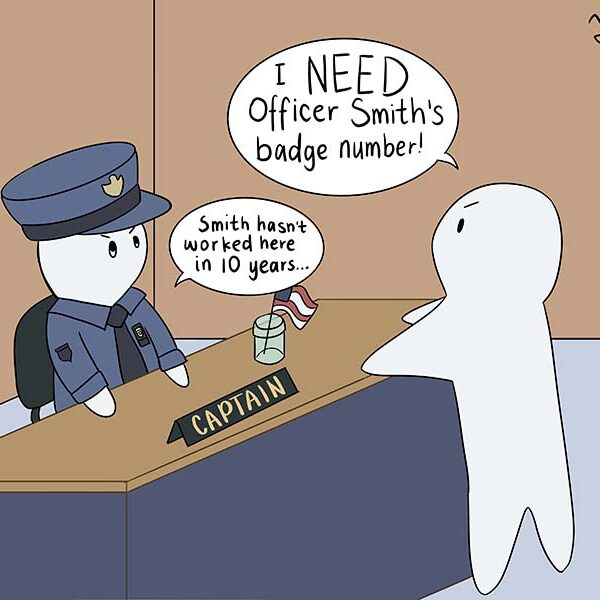
Cartoon depicting an individual seeking information on an arresting officer's badge number for a former offense, with the police captain noting that the officer no longer works there

Record Clearing as a “Rite of Passage”: What Kansas Expungement Reveals About Access to Justice 

Criminal record clearing has become a prominent policy tool for improving individuals’ employment, housing, and reentry outcomes. However, too often, eligibility does not translate into actual access or successful uptake. But why?  A look at the trials and tribulations of the expungement process in Kansas offers insight into the design of criminal law institutions as a whole.

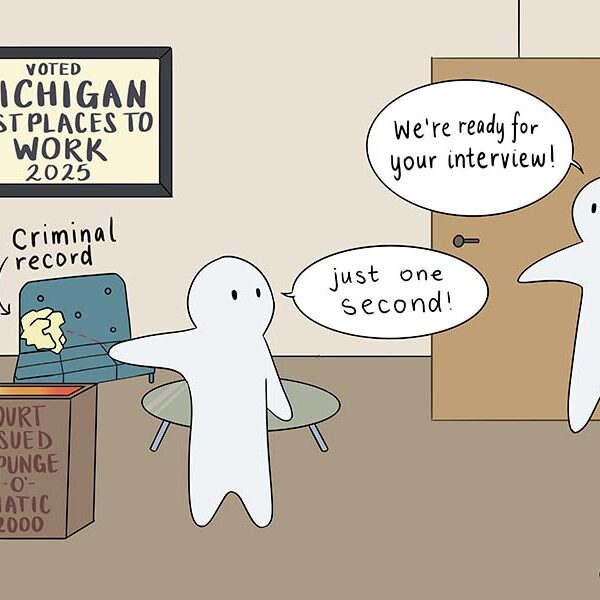
Cartoon depicting an individual throwing out a criminal record while heading into a Michigan job interview

Expungement in Michigan: Between Promise and Outcomes

A landmark study on Michigan’s expungement system found that criminal record clearing was linked to low recidivism rates, no compromise to public safety, and better outcomes for the recipients. But what does it say about the process when those promising results are not enough to entice eligible individuals?

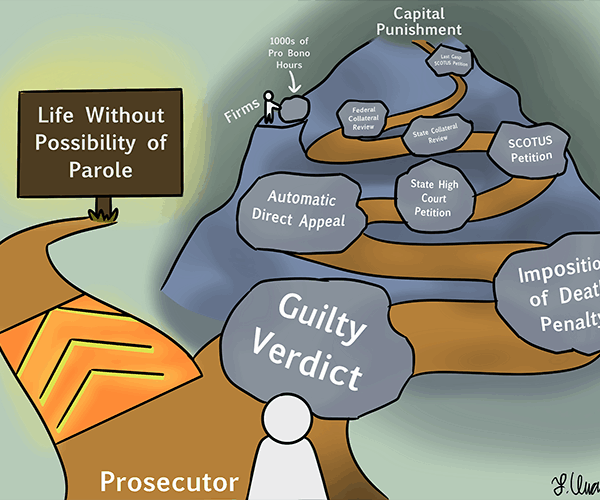
Cartoon depicting the clear path to a life without parole sentence, in comparison to the procedural safeguards to a death sentence

Life Without Parole: A Call for Legal Reform

Life without the possibility of parole (LWOP) is often considered a better alternative to capital punishment. But death sentences carry certain safeguards to minimize error rates including counsel at all stages of the criminal process, federal scrutiny of sentences, appeals at the state level, pro bono firm support, and media attention. And yet, about 40 percent of death sentences in a 22-year time frame were overturned. Without those same safeguards, LWOP would likely have at least similar error rates—if only we knew. HLS student Kristen Arnold argues for evidence-based research to determine whether the absence of counsel and appeals reveal errors worth reforming procedural protections for those sentenced to life without parole.

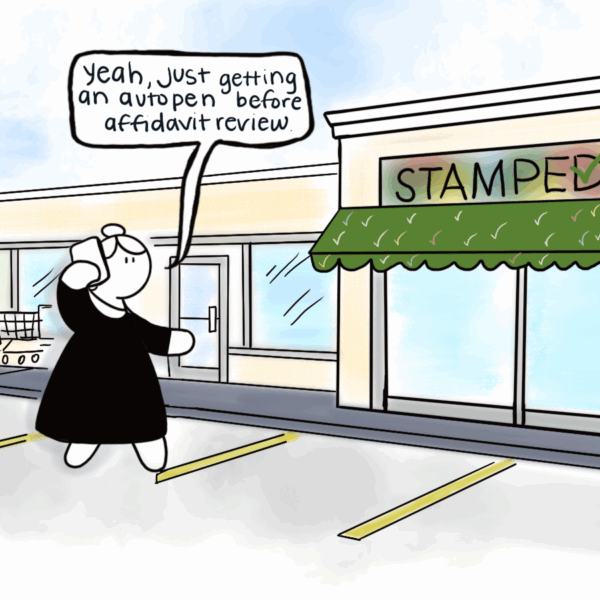
Cartoon depicting a judge on a cellphone saying they're buying an autopen before affidavit review

Rubber Stamp or Real Safeguard? Inside Judicial Review of Search Warrants

In a Harvard Law Review article last June, three authors wrote about their empirical research on how judicial review of warrants work in practice and whether such submission and reviews of warrants offer a meaningful check on police power or simply a system of rubber stamps. While the data analysis proved to be complex in determining best practices, it revealed some troubling patterns.

Does Pretrial Detention Prevent Failure to Appear and New Criminal Activity?

The U.S. has embraced a ‘tough on crime’ narrative since the 1980s, and it’s reflected in the tripling of the nation’s jail population since that time. Most of the increase in jail population growth, however, is due to those detained pretrial. The courts explain this as a necessity to deterring failure to appear and new criminal activity by the individual. The data offers a different argument.

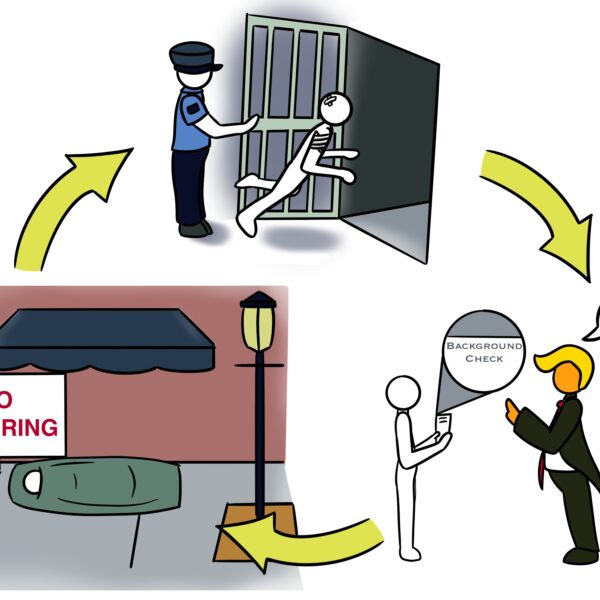
Cartoon depicting cycle of pretrial detention and the social and economic costs on communities

The Cost of Waiting: Economic and Social Impacts of Pretrial Detention

In 1987, the Supreme Court held that pretrial detention did not violate due process and is therefore constitutional. However, pretrial detention continues to raise humanitarian and justice concerns while also imposing serious and quantifiable costs on detained individuals, which, in turn, imposes economic and social costs on communities.

Cartoon depicting a defendant getting lower bail because of the presence of a lawyer

When Defendants get Counsel at First Appearance…

An individual’s First Appearance before a court in a criminal case has significant impacts on the defendant’s freedom and the costs that a criminal trial can bear on the defendant’s life, before it even begins. However, many states still begin the trial process without an offer of counsel. But what happens if defendants DO have counsel at First Appearances? 

Cartoon depicting the challenge of bringing access to pretrial justice in Africa

Denied: Global Right to Counsel Study 

Despite a right to counsel in both Kenya and Tunisia, the default for low- and middle-income individuals who cannot afford to pay for legal representation is no counsel at all. The A2J Lab began a project to study the effects of early access to counsel for misdemeanors in the two countries but was thwarted in January by a federal stop work order. What follows is an update on the project itself and the educational moment it provided.

Cartoon depicting an owl teaching life skills to some repeat offenders of the animal world

Education and Community Support: Key to Avoiding Repeat Arrests?

A typical cycle for someone caught in the U.S. criminal justice system due to poverty-related issues may look something like this: Risky behavior on the individual’s part leading to arrest for a low-level crime such as shoplifting, followed by court-appointed community service. Repeat. An A2J Lab study aims to find out whether a community diversion program offers a better chance of breaking this cycle than community service programs.

Scroll to Top