Civil Court-Based Reforms

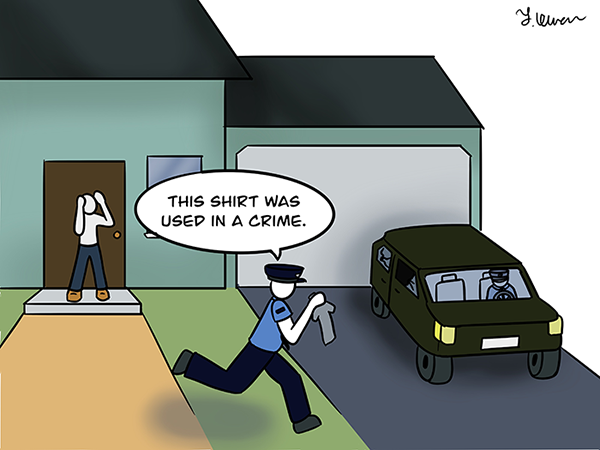
Cartoon depicting legal delays for involuntarily committed psychiatric patients with schizophrenia seeking treatment in Massachusetts

Involuntarily Committed Patients Face Legal Obstacles, Treatment Delays

In Massachusetts, involuntarily committed psychiatric patients with schizophrenia often face systemic barriers to timely treatment from procedural inefficiencies that prioritize legal formalities over patient well-being.  To address this access to justice challenge, the Commonwealth could implement reforms to streamline the legal process while preserving patient rights.

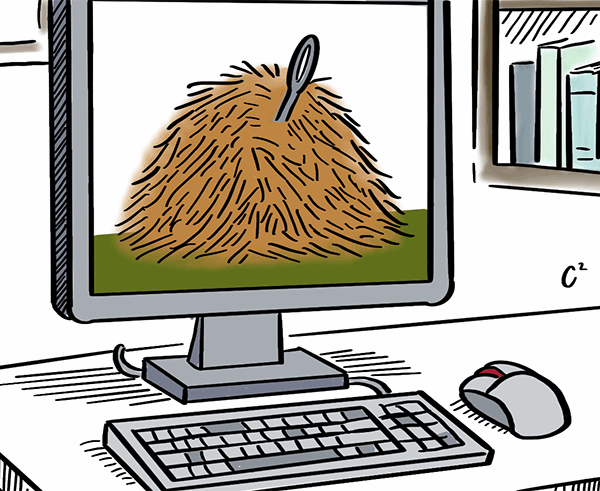
Cartoon depicting website navigation as searching for a needle in a haystack

Government Websites: Why are They so Bad (and Can They be Better)?

Government websites, when effective, can make the process of filing for bankruptcy, divorce, restraining orders and other common legal requests easier. Unfortunately, the quality of these websites varies significantly with many state and federal sites’ lack of accessibility reflecting limited access to justice for their users. Fixing these websites is a relatively easy and inexpensive method to expand accessibility to court systems and services, provided the willpower is there. 

Cartoon depicting a lawyer shown as a wolf evicting the Statue of Liberty and replacing her with Uncle Sam

Who Deserves a Lawyer? The Hidden Gender Bias in the Right to Counsel

The landmark court decision in Gideon v. Wainwright from 1963 made it a constitutional right, both in federal and state courts, for criminal defendants to have the right to counsel. That decision does not extend to civil cases– such as child custody, eviction, and domestic violences cases–which affect women, often from marginalized backgrounds, more than than men. HLS student Laura Aquino argues for a study to address the gender bias in denying legal assistance to civil litigants that may play a role in preserving a system that limits access to justice for women.

Cartoon depicting three little pics trying to avoid eviction from the wolf

Legal Literacy: An Upstream Eviction Prevention Strategy

With this housing insecurity having potentially numerous contributing factors, the Access to Justice Lab and research partners at the University of Houston Law Center targeted legal literacy as a potential key to addressing housing evictions in its recently completed pilot study.

Cartoon depicting a lawyer seeing medical quackery in his mirror reflection

What Law Can Learn from the History of Medicine

Law is a millennium behind medicine (give or take a few centuries). While medicine has evolved into a science-based discipline with rigorous empirical standards, law still operates on precedent, rhetoric, and theory untethered to scientific evidence. It doesn’t have to be that way. There is nothing so unique about the practice of law that makes it immune to data. Why should law, unlike every other discipline, not submit itself to math and science?

Cartoon about courthouse cellphone bans

Courthouse Cell Phone Bans Limit Access to Justice

Across the country, courthouse cell phone bans pose a significant barrier to entry to the legal system. HLS J.D. candidate Andrew Reed argues that in attempting to maintain a respectful atmosphere and protect privacy with cellphone bans, courthouses have inadvertently made access to justice less attainable for many, including pro se litigants.

Cartoon of effect of Zoom court on failure to appear rates

Student Voices: What Effect Does Zoom Court Have on Failure to Appear Rates?

The COVID-19 pandemic thrust online court into a mainstream alternative to traditional in-person court hearings. Zoom has shown mixed results, both in its ability to capture the needs of a court hearing (including sticky notes passed between attorneys and clients) and its role in reducing failure to appear rates in court. This makes online court a prime candidate for a randomized control trial to test its impact on court appearances.

Cartoon depicting mice with instructions on getting through a maze

Outside Research: Simple Solutions to Courts’ Failure-to-Appear Rates

Can we do anything about failure to appear in criminal cases? According to Alissa Fishbane, we can, and for once, what we can do is cheap and easy. Her research has shown that low-cost interventions such as redesigning summons and traffic tickets have been highly effective at reducing missed dates, resulting in fewer penalties for defendants, more efficient adjudication, and savings for the justice system as a whole.

Cartoon depicting non-lawyer legal services in agency immigration litigation

Student Voices: Non-lawyer Legal Services in Agency Immigration Litigation

Two-thirds of people facing deportation lack legal representation, and 86% of immigrants being detained do not have a lawyer. Without counsel, many will be deported to face persecution or violence – regardless of their legal right to stay. One partial solution may lie in empowering non-lawyers to take a larger role in representing individuals facing deportation.

Scroll to Top