

By Angela Caloia, J.D. candidate, Harvard Law School
STUDENT VOICES: The views expressed below are those of the student author and do not necessarily reflect the position of the Access to Justice Lab.
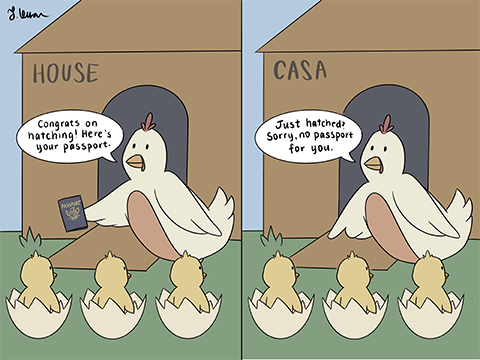
In 2011, the Supreme Court in Turner v. Rogers held that States could forego providing counsel at state expense in civil contempt proceedings resulting in incarceration only if they instead provide “substitute procedural safeguards.” Finding that Turner, who faced incarceration for failure to pay child support, had received neither counsel nor adequate safeguards, the Court held that his incarceration violated the Due Process Clause. Turner’s holding was expressly limited to the context of civil contempt proceedings involving the risk of incarceration. But it stands for the broader proposition that states cannot make the justice system practically inaccessible while narrowing the existence or availability of stand-in/alternative remedies.
In 2025, the Supreme Court in Trump v. CASA effectively dealt a death blow to the practice of universal (nationwide) injunctions—orders that extend relief beyond the parties to a lawsuit. Although the doctrinal merits of the decision remain contested, one consequence is the case’s implications on access to relief for similarly situated individuals. Without nationwide injunctions, many—particularly indigent—litigants who lack the resources to initiate or join litigation may be unable to obtain relief even when their claims mirror those of successful plaintiffs. The Court noted that alternative mechanisms for case aggregation, such as class actions, remain available. But these avenues often involve procedural and financial hurdles—hurdles that are tallest for the same litigants disadvantaged by the elimination of nationwide injunctions. For individuals who cannot realistically access the courts, nationwide injunctions functioned as a practical alternative remedy. By limiting them, the decision risks leaving those individuals without meaningful legal recourse.
The Rise of Universal Injunctions
An injunction is a form of equitable relief whereby the court either orders a party to take a certain action or forbids the party from doing so. A universal injunction, in the Court’s own words, is distinct with respect not to “where it applies, but whom it protects: A universal injunction prohibits the Government from enforcing the law against anyone, anywhere.” Universal injunctions extend relief to all persons and entities affected by the challenged law—including those who are not parties to the litigation.
Though universal injunctions are not a novel remedy, they rose to national stardom through the Obama, Trump, and Biden presidencies thanks to their increased use. Gridlocked Congresses led these administrations to turn to executive orders to implement major policy changes. This turn, so the story goes, encouraged litigants opposed to those policies to file suit in ideologically sympathetic courts, a practice critics disparagingly refer to as forum-shopping. District courts at least temporarily blocked President Obama’s Deferred Action for Parents of Americans, President Trump’s travel ban, President Biden’s COVID-19 vaccine mandate, and many other flagship initiatives.
As use expanded, so did criticism. Scholars, judges, and advocates argued such injunctions undermined percolation through the layers of the court system; contributed to the politicization of the judiciary by enabling a single judge to dictate national policy; raised the risk of conflicting instructions; exceeded traditional equitable powers; and distorted the separation of powers; among other concerns. Proponents countered point for point, arguing that such injunctions provided plaintiffs complete relief; protected similarly situated nonparties from irreparable injuries, avoided the costs and chaos associated with a patchwork of injunctions; and provided a check on the Executive Branch.
After dropping not-so-subtle hints over the past couple of terms that they found the practice problematic, the Supreme Court weighed in.
And the Fall: Trump v. CASA
On the first day of the second Trump administration, the President signed Executive Order 14160, “Protecting the Meaning and Value of American Citizenship,” (“Citizenship Order”) which purported to end automatic birthright citizenship for U.S.-born children whose parents were not citizens or green-card holders. Almost immediately, injunctions from three separate district courts ensued, barring application of the order to anyone in the country. The Trump administration filed emergency applications in the Supreme Court ignoring the constitutional arguments raised by the challengers below and asking the Court instead to adjudicate the validity of universal injunctions.
In a 6-3 decision, the Court held that federal courts generally lack the authority under the Judiciary Act of 1789 to enjoin universally the enforcement of an executive or legislative policy, with the notable (if opaque) caveat that broad relief remains permissible when necessary to provide “complete relief” to plaintiffs. The decision identified possible alternative means of claim aggregation, including class actions, APA relief, and claims by states.
This post addresses some of the access to justice implications the Court’s decision poses, illustrated through its potential impact on nonparties who would have benefited from the universal injunctions of EO 14160. The argument is that, regardless of political tilt, the scale of the implications should militate in favor of congressional intervention.
Fragmentation: More individuals must sue to obtain relief
Whereas with a universal injunction, a single lawsuit could protect thousands, now those thousands must bring their own cases. As Justice Sotomayor argued in dissent, “[T]he majority holds that, absent cumbersome class-action litigation, courts cannot completely enjoin even . . . plainly unlawful policies unless doing so is necessary to afford the formal parties complete relief. That holding renders constitutional guarantees meaningful in name only for any individuals who are not parties to a lawsuit.”
The burden Justice Sotomayor identifies will fall heaviest on the most vulnerable. The other 99% of human beings in the United States lack resources to sustain complex litigation over government policies. Public interest groups lack resources to litigate thousands of cases, not that courts could adjudicate them even if they were filed.
Take the case of the Citizenship Order, for example. An estimated 150,000 children are born each year to parents who are not legal permanent residents. Absent a universal injunction or case aggregation (see below), each individual family must file suit to obtain relief. No one thinks they can do so.
Increased importance of procedural sophistication
Class actions represent one way to avoid the prospect of hauling each individual into court. But class certification is a notoriously complex, convoluted process, which often requires extensive legal expertise and, by extension, resources. The Court in Wal-Mart v. Sykes raised the bar to establish the commonality requirement, and Justice Alito warned in his CASA concurrence that lower court judges should not cut corners when it comes to certifying classes. Moreover, by insisting that such cases be routed through class certification, the government gets two chances to litigate the merits: once at class certification, once at the merits stage. That is because, as held by the majority in Wal-Mart, “proof of commonality necessarily overlaps with respondents’ merits contention.”
The Citizenship Order case illustrates the potential obstacles to establishing a class. Within hours of CASA’s release on June 27th, the ACLU joined other civil rights organizations to file a lawsuit in New Hampshire and requested that the court certify a class including all current and future children that E.O. 14160 affected, as well as their parents. The government opposed certification on multiple grounds, including lack of commonality, prematurity, and the need for additional discovery. The court on July 10th ultimately certified a narrowed provisional class, excluding parents whose injuries the court deemed too diverse to satisfy Rule 23(a). The class is thus arguably underinclusive—and a stricter application of the factors could lead a district court to deny certification altogether.
Unequal access to justice across and within geographies
Plaintiffs’ access to justice will now depend on geography. Without universal injunctions, whether an individual can obtain relief from an unlawful federal policy may turn on whether that individual can bring suit in a jurisdiction where a district court has enjoined the policy. Individuals who can sue only in districts that have not yet addressed the issue, or that decline to grant similar relief, may remain subject to the challenged policy despite being identically situated to those who have obtained protection elsewhere.
In the Citizenship Order scenario, for example, district court judges in Washington, Maryland, and Massachusetts had issued nationwide injunctions, and one might reasonably expect those judges to rule similarly in an individual plaintiff’s case. But until the relevant courts of appeals issue rulings, other district court judges within those circuits could reach the opposite conclusion, as could judges in other circuits. Consistency is a cornerstone of access to justice, which this new regime threatens to erode.
Delayed (or nonexistent) relief for vulnerable populations and irreparable harm
Access to justice will not only be reduced; it will also be delayed. Whereas universal injunctions allowed plaintiffs to obtain immediate relief from challenged policies, any alternative entails a time lag. Bringing an individual case takes time; appealing a negative decision takes longer.
In some cases, such a delay would, as a practical matter, render access to justice illusory, because plaintiffs may suffer the very harm they sought to prevent through litigation before relief can be obtained. The Citizenship Order scenario illustrates this point: pending resolution of their case, individuals could be deported. Few injuries more clearly qualify as irreparable.
The Citizenship case tees up a second issue regarding relief under the new regime: if the government does not appeal an adverse ruling in an individual case, it could enforce its policy (even if ruled unlawful) against all other similarly situated individuals without impediment. Assuming the government defeats class certification, it could lose in every single district court—say 1,000 individual suits—and still deport the other 149,000 children.
And though Justice Barrett’s majority opinion relies heavily on a concession by Solicitor General Sauer that the government would appeal adverse rulings on the Citizenship Clause challenge to the Supreme Court and respect that Court’s judgments, recently district courts have stopped crediting representations from government lawyers given their track record of inaccuracies. Moreover, the Solicitor General’s representation was limited to the citizenship litigation; in future contexts, the government could decline to appeal losses in hundreds or thousands of cases and continue enforcing a plainly unconstitutional policy without contradicting its representations to the Supreme Court.
Where to go from here: Should Universal Injunctions Rise Again?
For the reasons above, completely removing universal injunctions from district courts’ toolboxes may be overkill, especially because less drastic measures could mitigate the most common criticisms levied against them. The Court crafted its opinion in statutory, rather than constitutional, terms, meaning that Congress could, through new legislation, empower lower courts to issue universal injunctions subject to defined constraints.
For example, one proposal would have Congress mandate three-judge district court panels, whose decisions would be immediately appealable to the Supreme Court, to rule on universal injunctions challenging federal government policies. Congress employed such a scheme for politically charged litigation in the past—particularly during the Civil Rights Era—and multi-judge panels may reduce forum shopping and single-judge control over national policy. Alternatively, Congress could channel petitions for universal injunctions to a single forum. In the past, Democratic and Republican legislators have introduced legislation to this effect: the Stop Judge Shopping Act and the Assigning Proper Placement of Executive Action Lawsuits Act (“APPEAL Act”) would have granted exclusive jurisdiction over cases seeking national remedies to the U.S. District Court for the District of Columbia. A third proposal would have Congress institute a national lottery for universal injunctions, mirroring the procedures for multi-court challenges to agency action under 28 U.S.C. § 2112.152. The lottery would determine which among all federal district courts would adjudicate specific cases seeking broad relief.
Such congressional action would likely require the Court to decide whether courts can issue universal injunctions consistent with the Constitution—a question the majority left unresolved but Justice Thomas answered in the negative in his concurrence. While the door is open, however, Congress should consider acting to preserve meaningful access to justice.
If you’re interested in more on this topic, listen to our podcast episode.