Algorithms & AI

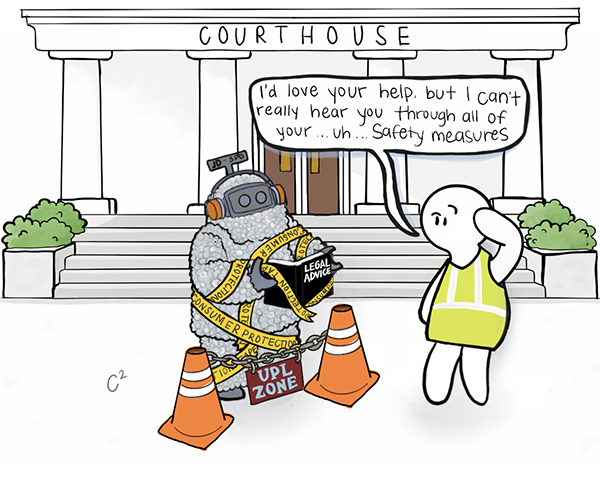
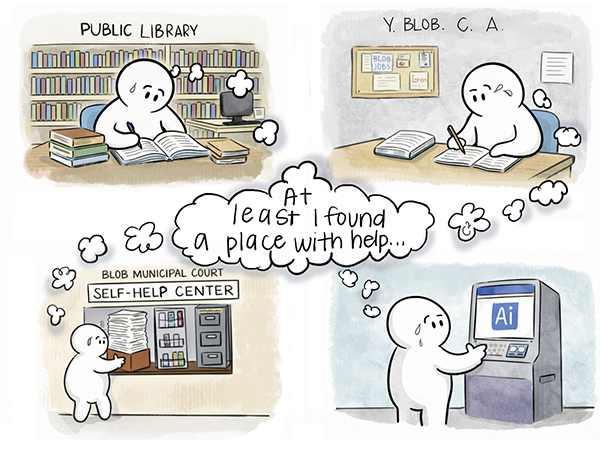
Cartoon depicting a pro se litigant seeking help from AI, but AI is literally tied up in caution tape from UPL regulations

Is UPL Targeting AI to Protect Consumers or Protect Lawyers?

Law could use a tool like AI to bridge the accessibility gap between practitioners and the pro se litigants attempting to navigate the legal field. In this second post in a two-part series on AI and the unauthorized practice of law (UPL), HLS student Elizabeth Guo outlines six points of argument in favor of AI and against UPL as the tool to regulate AI in legal practice.

Cartoon depicting a sign pointing up a long path to Court (10-hour line) vs a sign pointing to a desk with a robot indicating a 5-minute AI decision

Brazil’s AI-Driven Courts: Innovation Without Evaluation

To tackle one of the world’s largest backlog of cases awaiting judicial decisions, Brazil’s courts are relying on AI systems to prioritize cases, support legal research, and even draft judicial decisions. The change in process may help address cases much quicker but at what cost? Largely untested in the justice system, AI’s impact deserves rigorous evaluation before deploying it in real-world situations.

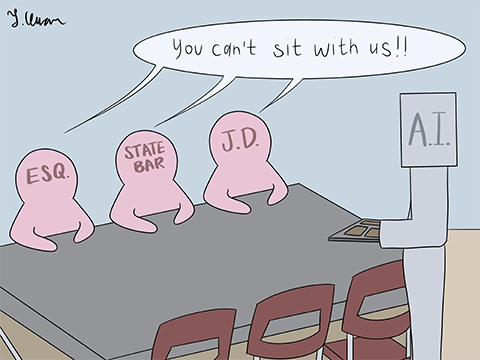
Cartoon depicting AI as a robot not allowed to sit at the lunch table with the lawyers, J.D. candidates, and bar associations.

How Can General-Purpose AI Withstand UPL Scrutiny?

In the first of a two-part series on AI and the Unauthorized Practice of Law (UPL), HLS J.D. candidate Elizabeth Guo explores current UPL rules, the challenging definition of “practice of law”, and the reasons why general-purpose AI tools will not likely be tested by UPL rules when it comes to providing legal information.

"Technology Revolution" podcast slide with headshots of the speakers

2026 Predictions for AI in Access to Justice

The A2J Lab’s Mandy Mobley Li, Assistant Director of Research Innovations, was one of the future-focused visionaries featured in Bonnie D. Graham’s podcast, “Technology Revolution: The Future of Now.” Take a listen to her 2026 predictions for AI in the access-to-justice space.

Cartoon depicting pro bono attorneys getting legal information and advice from AI

A2J Lab Project in Development: AI Assistance in Provision of Legal Information & Advice 

The OpenJustice project, now just a year since inception, has gained interest due in part to its hot topic: combining access to justice and artificial intelligence. The project addresses whether AI allows volunteer pro bono attorneys and staff to provide legal information and advice (without a traditional attorney-client relationship) more effectively and efficiently than status quo operations, which do not use AI assistance.

Scroll to Top