Civil Legal Services

Cartoon depicting an individual listening to music but bound to a ball and chain marked by a contract

Do Consumers Fare Better in Court or Mandated Arbitration? 

Conflicting research exists to address whether consumers who “agree” to mandatory arbitration clauses have worse outcomes compared to consumers who are free to litigate in courts. Courts typically assume that by entering a contract mandating arbitration, each party freely bargained for that clause. While there are concerns about how knowingly consumers agree to arbitration clauses, HLS J.D. candidate Rachel Barkin writes about consumer outcomes, based on the dispute resolution process, and potential areas for future research.

Cartoon depicting an outdated mandate requiring a typewriter in order to file for divorce

Unveiling the Complexity: Divorce and Access to Justice

Marriage in the U.S. typically requires a marriage license, payment of a nominal fee, and often a short waiting period from the license signing to marriage. Divorce, on the other hand, typically involves lawyers; courthouse visits; comparatively higher fees; and, in some cases, antiquated roadblocks just to implement this federal constitutional right. The result is that divorce can be an access-to-justice issue for low-income individuals who are faced with trying to pay for a lawyer they cannot afford or navigate unnecessarily complex divorce filing procedures on their own.  

graphic of hands with symbols of necessities

Mother Up Study Links Child Neglect, Poverty, and Guaranteed Income

The Access to Justice Lab published a newly released study of Washington, D.C. mothers involved in Child Protective Services demonstrating that government-funded child welfare programs are effective in reducing child neglect cases by prioritizing economic support to overcome conditions caused by poverty.

Cartoon depicting website navigation as searching for a needle in a haystack

Government Websites: Why are They so Bad (and Can They be Better)?

Government websites, when effective, can make the process of filing for bankruptcy, divorce, restraining orders and other common legal requests easier. Unfortunately, the quality of these websites varies significantly with many state and federal sites’ lack of accessibility reflecting limited access to justice for their users. Fixing these websites is a relatively easy and inexpensive method to expand accessibility to court systems and services, provided the willpower is there. 

Cartoon depicting pro se litigants struggling to understand the law

Do Pro Se Litigants Struggle to Interpret the Law?

Do pro se litigants struggle to interpret rules of civil procedure? Or could noncompliance be explained by other access to justice (A2J) barriers? Advocates for pro se litigants often focus on translating the law into plain language. But these efforts fall short of addressing deployability, an individual’s ability to leverage their knowledge of the law in court. Recent research suggests many A2J barriers fall into the latter category.

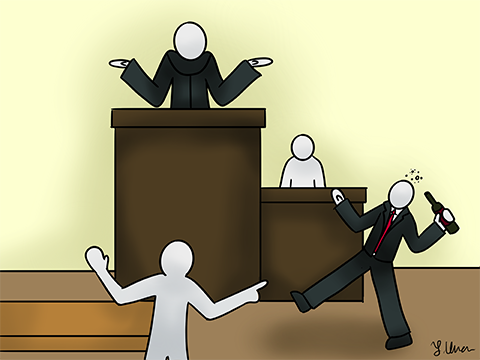
Cartoon depicting a lawyer shown as a wolf evicting the Statue of Liberty and replacing her with Uncle Sam

Who Deserves a Lawyer? The Hidden Gender Bias in the Right to Counsel

The landmark court decision in Gideon v. Wainwright from 1963 made it a constitutional right, both in federal and state courts, for criminal defendants to have the right to counsel. That decision does not extend to civil cases– such as child custody, eviction, and domestic violences cases–which affect women, often from marginalized backgrounds, more than than men. HLS student Laura Aquino argues for a study to address the gender bias in denying legal assistance to civil litigants that may play a role in preserving a system that limits access to justice for women.

Cartoon depicting legal information programs' role in supporting unrepresented noncitizens navigating the U.S. immigration system

Student Voices — Legal Information Programs: A Possible Way to Reduce Harm for Unrepresented Noncitizens in Immigration Proceedings

Legal information programs aim to support pro se noncitizens navigating the high stakes and extreme inequities of the U.S. system. Given that 63% of all noncitizens and 83% of detained noncitizens proceed without counsel, these programs could act as necessary stopgaps. It is worth delving deeper into the nature of these programs and the evidence that these programs promote access to justice for unrepresented noncitizens navigating the complexities of our immigration system.

Cartoon depicting non-lawyer legal services in agency immigration litigation

Student Voices: Non-lawyer Legal Services in Agency Immigration Litigation

Two-thirds of people facing deportation lack legal representation, and 86% of immigrants being detained do not have a lawyer. Without counsel, many will be deported to face persecution or violence – regardless of their legal right to stay. One partial solution may lie in empowering non-lawyers to take a larger role in representing individuals facing deportation.

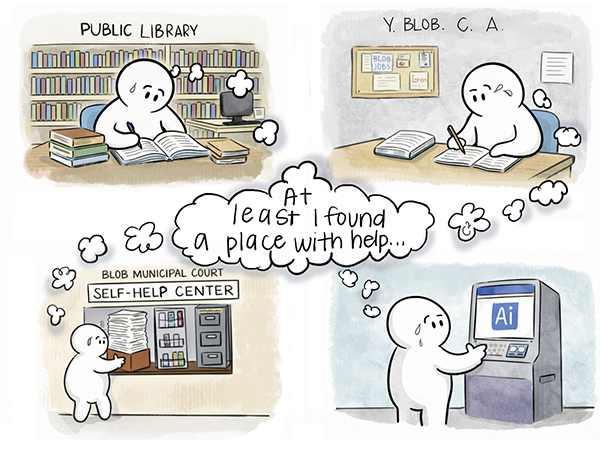
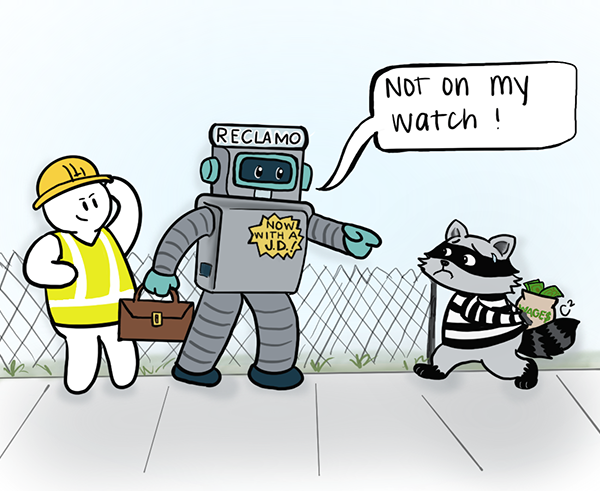
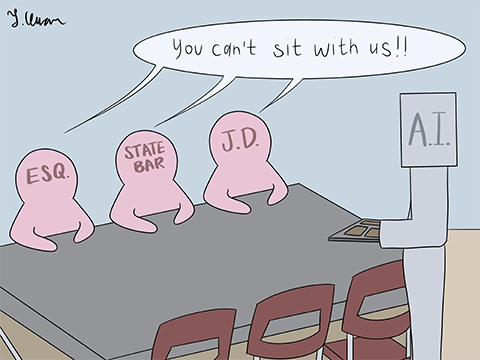
Cartoon depicting pro bono attorneys getting legal information and advice from AI

A2J Lab Project in Development: AI Assistance in Provision of Legal Information & Advice 

The OpenJustice project, now just a year since inception, has gained interest due in part to its hot topic: combining access to justice and artificial intelligence. The project addresses whether AI allows volunteer pro bono attorneys and staff to provide legal information and advice (without a traditional attorney-client relationship) more effectively and efficiently than status quo operations, which do not use AI assistance.

Scroll to Top