

By Andrew Garcia, J.D. candidate, Harvard Law School
STUDENT VOICES: The views expressed below are those of the student author and do not necessarily reflect the position of the Access to Justice Lab.
Historically, labor organizations spearheaded the labor movement by leveraging collective bargaining in workplaces nationwide to secure workers’ rights. Labor unions continue to do so by organizing workers pursuant to the National Labor Relations Act (“NLRA”). The National Relations Labor Board enforces the NLRA, which establishes the fundamental rights of certain employees at private-sector workplaces to seek better working conditions and to designate representatives through workplace unionization without fear of employer retaliation.
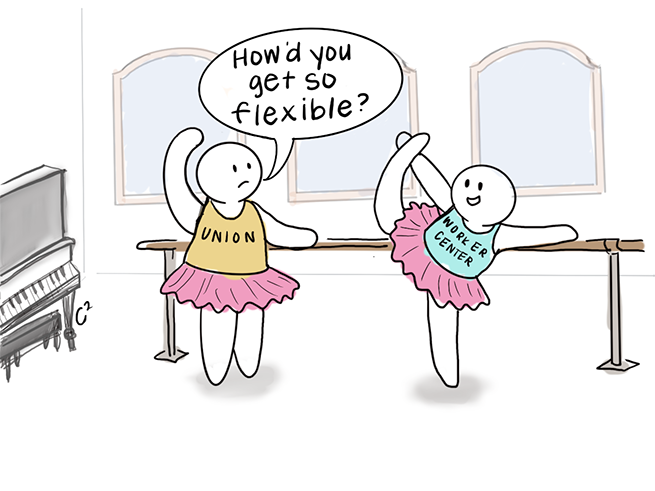
As helpful as labor unions have been, they could not address all worker challenges. For example, workers and sectors that the NLRA excludes are statutorily barred from exercising rights through unionization. Worker centers may be the labor organization most capable of facilitating collective action for workers whom unions cannot represent. This post provides background on labor unions before focusing on how worker centers address unmet needs, including access to justice.
Some History
America’s labor unions date back to the country’s formation, with origins in the Industrial Revolution. Over the decades, labor unions have evolved, becoming more inclusive and driving change in working conditions and treatment across the public and private sectors. Under the NLRA, unions must be membership-driven, democratic organizations governed by laws requiring financial transparency and integrity, fair elections, and fair representation of all workers. Labor unions have shaped our country’s political, economic, and cultural fabric including contributing to the creation of the Department of Labor in 1913, the Clayton Antitrust Act of 1914 which recognized workers’ rights to strike and boycott, and the enactment of Walsh-Healey Public Contracts Act of 1936 and the Fair Labor Standards Act of 1938, which mandates overtime pay, minimum wage, and basic child labor laws. Although union membership peaked in 1979, it has rebounded in recent years, and unions continue to organize workers. However, unions face limits in representation when confined to discrete employers and sectors.
Labor organizations vary in structure and, by extension, the methods available to them in connecting workers with the means to assert their rights in the workplace. Regardless of form or structure, labor organizations should facilitate access to information, representation, and organizing efforts that promote workers’ rights. Following the COVID-19 Pandemic, the Center for Labor and a Just Economy’s Labor Organization Innovation Initiative identifies a watershed moment for the labor movement, as economic, technological, and legal forces combine to create an opportunity to change workers’ rights organizing. This juncture presents an opportunity for the access-to-justice movement. As the labor legal landscape develops, labor organizations must continue to innovate their use of informal and formal collective bargaining, as well as any other tools available to them, to connect workers to mechanisms that enable them to assert their rights. Understanding how worker centers connect their members to these tools may help all labor organizations further innovate their own advocacy.
Worker Centers
Workers excluded from legal labor protections—because of immigration status or any other categorical exemption under the NLRA, such as many government employees—must seek other means to address unmet needs with their employers. For example, workers who also lack protection against employer retaliation for organizing collective bargaining efforts also lack access to mechanisms to negotiate for better working conditions and fair compensation.
Worker centers are community-based organizations dedicated to providing low-wage workers with resources and opportunities to express their collective voice and take collective action. These centers provide resources and opportunities by meeting the labor and non-labor needs of low-wage workers across companies, sectors, and communities. In the United States, these centers help immigrants navigate the world of American labor and provide low-wage workers excluded from NLRA protections with a range of opportunities to assert their rights. Operating in this liminal space, these centers develop new methods to secure rights and raise standards across low-wage industries by enforcing wage-theft ordinances, supporting minimum-wage increases, securing domestic-worker bills of rights and paid-leave policies, and advancing protections for immigrant and low-wage workers. This generation of mediating institutions integrates low-wage workers into American civic life and facilitates collective education and action to cultivate higher standards in low-wage communities nationwide.
As gateway organizations, worker centers provide workers with information and training in workers’ rights, employment, housing and immigration law, legal services, the English language, and other areas. Unlike workplace-based unions, worker centers are typically situated in the communities of the people they serve. Members include workers across multiple sectors, employers, neighborhoods and national and ethnic identities. Worker centers often represent low-wage workers, and their diverse membership faces wage-and-hour and employment-law issues as well as broader life challenges. As needs arise, centers addressing intersecting community challenges must adapt to emerging issues.
The services worker centers provide are integral to their advocacy. The extent to which worker centers meet workers’ non-labor needs may affect how effectively those centers address workers’ labor needs. Whether by providing workers access to workforce development trainings, wage theft recovery mechanisms, health services, or weekly food distributions to address nutrition insecurity, worker centers must be responsive to the emerging needs of their members. A center’s responsiveness should be informed by a ground-level connection to the communities of workers the center represents or the center risks low membership and low funding opportunities. Without community backing, the organizing and advocacy of worker centers —including successful outcomes—would not be possible. Providing services functions as a gateway to future involvement in the promotion of, and access to, collectively bargained outcomes led by workers.
During the COVID-19 pandemic, New York City workers excluded from the social safety net faced significant hardship. Because of immigration status or independent-contractor or “gig worker” classification, among other factors, thousands of excluded New Yorkers and their families lacked access to basic necessities and support systems, such as unemployment benefits, made available to others. In response, worker centers provided an organizational structure for their members’ advocacy otherwise unavailable to them as workers excluded from the refuge of labor unions and collective bargaining powers provided under current labor laws. Day laborers, food venders, and delivery-service workers led the Excluded Workers Fund (“EWF”) campaign to secure $2.1 billion from Albany in a historic relief fund replicated across the nation. In addition to providing mutual aid to address workers’ basic unmet needs, the worker centers that were part of the EWF coalition organized the workers by educating them on their rights and supporting collective action. Without the coalition’s capacity to organize thousands of excluded workers to shut down multiple major New York City bridges, lead a 23-day hunger strike, and spearhead a historic march from New York City to Albany, the Excluded Workers Fund would not have been established. Worker centers continued to support excluded workers by assisting them in filing their applications to the New York State Department of Labor to access the Fund.
The EWF coalition’s worker centers supported their members by providing them with information and resources, acting as conduits to government, expanding access to existing systems, and creating new ones. Coalition members and workers continue this advocacy. In January 2026, New York City’s Department of Consumer and Worker Protection announced that all grocery delivery apps must pay workers a $21.44/hour minimum wage not including tips following advocacy by Los Deliveristas Unidos and other coalition members. In March 2026, New York City Mayor Zohran Mamdani named Carina Kaufman-Gutierrez, co-director of the Street Vendor Project, a frontline EWF coalition member, to lead the city’s first Office of Street Vendor Services.
Worker centers must continue to navigate how their interstitial legal categorization affects their flexibility and capacity to advocate for a broad range of workers. With that power comes great responsibility, and worker centers and the workers they serve may continue to test the boundaries of collective bargaining.
If you’re interested in more on this topic, listen to our podcast episode.