Ethics

Cartoon depicting a soccer referee adding barbed wire to a prisoner's goal post, showing different regulations applied to prisoners

Ethics and Challenges of Prison Research Regulations

Federal regulations impose additional requirements and restrictions on any Institutional Review Board-approved research that involves incarcerated individuals as subjects. These rules are designed to protect prisoners, a population which has too-often throughout history been taken advantage of by researchers. But how do Subpart C’s extra protections work—and do they even make sense?

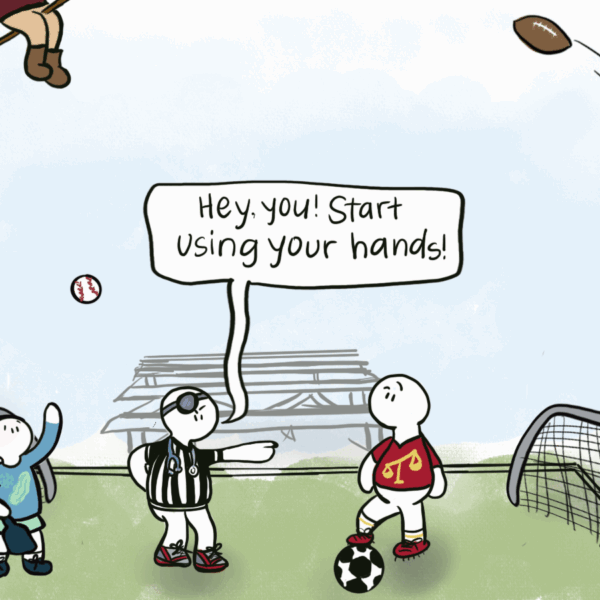
Cartoon depicting a soccer player being told by a ref to start using hands in the game.

Navigating Informed Consent: Challenges in Legal Research

In the United States, federal regulations protect the autonomy of individuals participating in research. That protection often takes the form of insisting that a potential participant provides informed consent before they can be randomized to one or another treatment. Sometimes, however, it is possible to proceed without eliciting informed consent from study participants. This fourth “Ethics of RCTs in the Law” series blog posts discusses the complexities of the informed consent process and the ethical considerations associated with research in a legal setting.

Cartoon depicting an official deciding who is a participant in the "Human Subjects Bowl"

Who is a ‘Human Subject’ in Legal Field Research?

Though it might seem like a purely academic regulatory puzzle, the way researchers, IRBs, and courts define “human subjects” in legal research will shape the future of evidence-based reform in access to justice and beyond.

Cartoon depicting different sports players participating in a Human Subjects Bowl

The Ethics of RCTs in Law: Navigating IRBs in Human Subjects Research 

Using humans in legal research requires ethical oversight, much like scientific research, but with some distinctions. IRB expert Shannon Sewards shares those nuanced differences and offers insight into some of the challenges in determining activities requiring IRB oversight, balancing ethics with regulatory requirements, and operating with reduced support from the federal government. 

Cartoon depicting Common Rule protections for research participants

The Ethics of RCTs in the Law: Demystifying IRBs and the Common Rule

When researchers in the United States conduct human subjects research, they must submit to the watchful eye of Institutional Review Boards. To many researchers, especially those outside of fields typically engaged in human subjects research, IRBs are mysterious, bureaucratic entities. Here, we delve into demystifying IRBs and the Common Rule.

Scroll to Top