Mental Health

Cartoon depicting the aftermath of an expungement party in which the individual does not feel better after obtaining an expungement order

The Expungement Experiment: Housing and Happiness Outcomes

In this third post about the Final Stage Reentry Project, we focus on the impact expungement has on housing and on identity and overall life satisfaction. Despite our hypothesis that a clear record would clear the way for housing and happiness, expungement once again had no impact. We dig into these results and the potential reasons for the findings.

Cartoon depicting an "expungement party" with a blindfolded donkey playing "pin the expungement", showing the challenges associated with obtaining an expungement

The Expungement Experiment: Effectiveness of Legal Aid 

Would-be criminal justice system reformers have long believed that a criminal record inhibits the search for secure employment, housing, and life happiness, and those problems in turn lead to increased recidivism. For reformers, the answer to these challenges has been some kind of criminal justice record clearing. But that theory has only some evidence to support it. In this first of three posts, the A2J Lab dives into its long-running randomized controlled trial in Kansas studying expungement’s impact on reentry outcomes.

graphic of hands with symbols of necessities

Mother Up Study Links Child Neglect, Poverty, and Guaranteed Income

The Access to Justice Lab published a newly released study of Washington, D.C. mothers involved in Child Protective Services demonstrating that government-funded child welfare programs are effective in reducing child neglect cases by prioritizing economic support to overcome conditions caused by poverty.

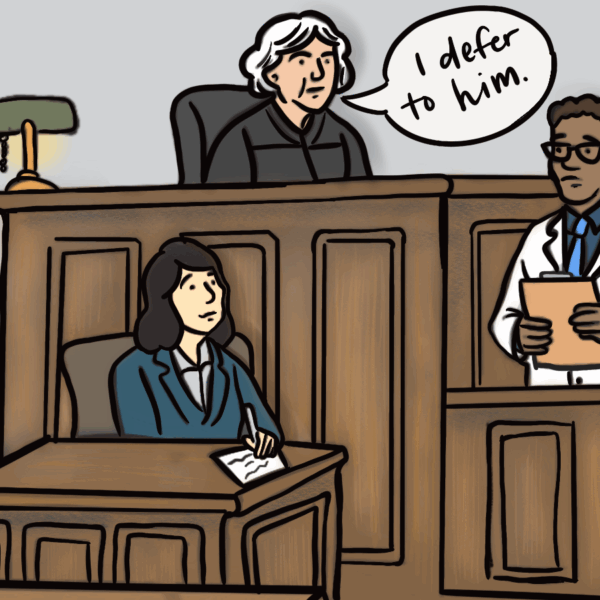
Cartoon reflecting whether legal services can help families avoid child welfare involvement

A2J Lab Study in the Field: Could Holistic Legal Services Help Families Avoid the Child Welfare System?

Conducting randomized control trials in the law can be a decade-long (or longer) process. Our “Child Welfare” project evaluates whether families with children who face poverty-related legal and social challenges can avoid unnecessary entries into the child welfare system with the assistance of holistic legal services – a combination of social worker services and a traditional attorney-client relationship. The study is five years in the making and still just half-way through completion, but we’re sharing its origin and process anyway.

Scroll to Top