Employment Security

Cartoon depicting two individuals at an expungement party discussing how one can't find a job and the other is dissatisfied at the same job.

The Expungement Experiment: Impact on Employment

Criminal record clearing may help individuals attain jobs, housing, and life satisfaction, according to many criminal justice system reformers. This week, we look at the A2J Lab’s long-running expungement study and the impact of record clearing on employment–a reason 84 percent of our study participants cited for wanting an expungement. The results surprised researchers and clarified policy needs for effective expungement outcomes.

Cartoon depicting an "expungement party" with a blindfolded donkey playing "pin the expungement", showing the challenges associated with obtaining an expungement

The Expungement Experiment: Effectiveness of Legal Aid 

Would-be criminal justice system reformers have long believed that a criminal record inhibits the search for secure employment, housing, and life happiness, and those problems in turn lead to increased recidivism. For reformers, the answer to these challenges has been some kind of criminal justice record clearing. But that theory has only some evidence to support it. In this first of three posts, the A2J Lab dives into its long-running randomized controlled trial in Kansas studying expungement’s impact on reentry outcomes.

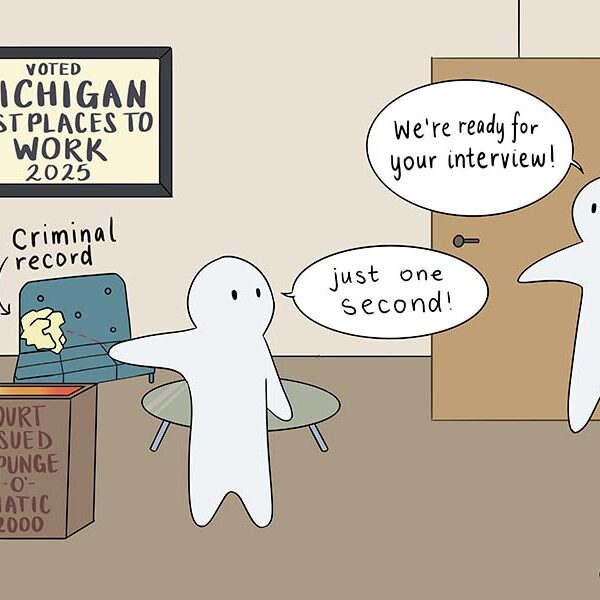
Cartoon depicting an individual throwing out a criminal record while heading into a Michigan job interview

Expungement in Michigan: Between Promise and Outcomes

A landmark study on Michigan’s expungement system found that criminal record clearing was linked to low recidivism rates, no compromise to public safety, and better outcomes for the recipients. But what does it say about the process when those promising results are not enough to entice eligible individuals?

graphic of hands with symbols of necessities

Mother Up Study Links Child Neglect, Poverty, and Guaranteed Income

The Access to Justice Lab published a newly released study of Washington, D.C. mothers involved in Child Protective Services demonstrating that government-funded child welfare programs are effective in reducing child neglect cases by prioritizing economic support to overcome conditions caused by poverty.

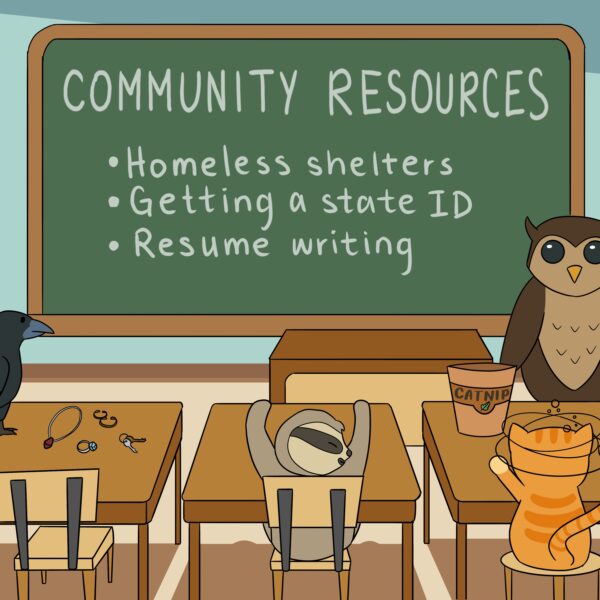
Cartoon depicting an owl teaching life skills to some repeat offenders of the animal world

Education and Community Support: Key to Avoiding Repeat Arrests?

A typical cycle for someone caught in the U.S. criminal justice system due to poverty-related issues may look something like this: Risky behavior on the individual’s part leading to arrest for a low-level crime such as shoplifting, followed by court-appointed community service. Repeat. An A2J Lab study aims to find out whether a community diversion program offers a better chance of breaking this cycle than community service programs.

Cartoon reflecting whether legal services can help families avoid child welfare involvement

A2J Lab Study in the Field: Could Holistic Legal Services Help Families Avoid the Child Welfare System?

Conducting randomized control trials in the law can be a decade-long (or longer) process. Our “Child Welfare” project evaluates whether families with children who face poverty-related legal and social challenges can avoid unnecessary entries into the child welfare system with the assistance of holistic legal services – a combination of social worker services and a traditional attorney-client relationship. The study is five years in the making and still just half-way through completion, but we’re sharing its origin and process anyway.

Scroll to Top