Record Clearing

Cartoon depicting the aftermath of an expungement party in which the individual does not feel better after obtaining an expungement order

The Expungement Experiment: Housing and Happiness Outcomes

In this third post about the Final Stage Reentry Project, we focus on the impact expungement has on housing and on identity and overall life satisfaction. Despite our hypothesis that a clear record would clear the way for housing and happiness, expungement once again had no impact. We dig into these results and the potential reasons for the findings.

Cartoon depicting two individuals at an expungement party discussing how one can't find a job and the other is dissatisfied at the same job.

The Expungement Experiment: Impact on Employment

Criminal record clearing may help individuals attain jobs, housing, and life satisfaction, according to many criminal justice system reformers. This week, we look at the A2J Lab’s long-running expungement study and the impact of record clearing on employment–a reason 84 percent of our study participants cited for wanting an expungement. The results surprised researchers and clarified policy needs for effective expungement outcomes.

Cartoon depicting an "expungement party" with a blindfolded donkey playing "pin the expungement", showing the challenges associated with obtaining an expungement

The Expungement Experiment: Effectiveness of Legal Aid 

Would-be criminal justice system reformers have long believed that a criminal record inhibits the search for secure employment, housing, and life happiness, and those problems in turn lead to increased recidivism. For reformers, the answer to these challenges has been some kind of criminal justice record clearing. But that theory has only some evidence to support it. In this first of three posts, the A2J Lab dives into its long-running randomized controlled trial in Kansas studying expungement’s impact on reentry outcomes.

Cartoon depicts individual not being invited to an expungement party

Can Data-Driven Policy Shape Expungement Uptake?

What if thousands, perhaps millions, of people could stop their past—their criminal record, that is—from following them in job interviews and housing applications? What if some barriers to record clearing could be improved by policy, and not by an individual’s circumstances? Would that improve uptake in expungement? A 2025 article in the North Dakota Law Review addresses the possibilities by examining the current state of record clearing in Pennsylvania and Kansas and potential policy reforms in both states that would produce the greatest number of eligible records for clearing. 

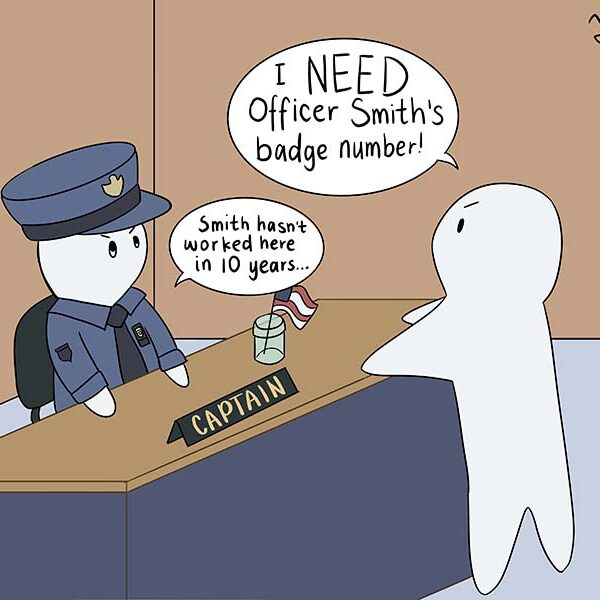
Cartoon depicting an individual seeking information on an arresting officer's badge number for a former offense, with the police captain noting that the officer no longer works there

Record Clearing as a “Rite of Passage”: What Kansas Expungement Reveals About Access to Justice 

Criminal record clearing has become a prominent policy tool for improving individuals’ employment, housing, and reentry outcomes. However, too often, eligibility does not translate into actual access or successful uptake. But why?  A look at the trials and tribulations of the expungement process in Kansas offers insight into the design of criminal law institutions as a whole.

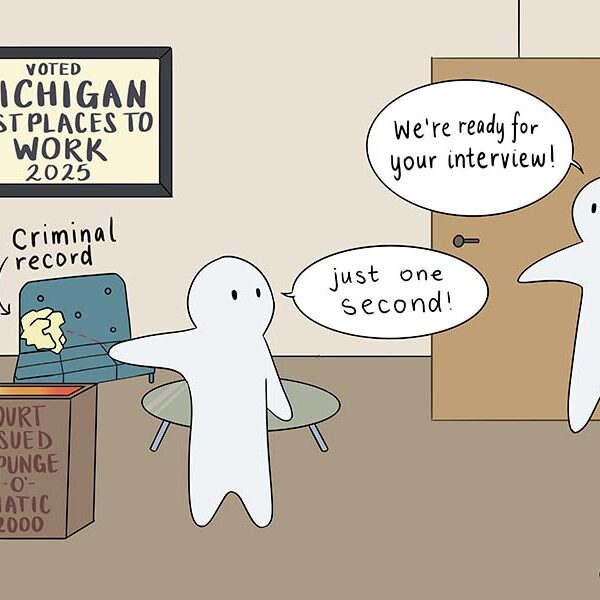
Cartoon depicting an individual throwing out a criminal record while heading into a Michigan job interview

Expungement in Michigan: Between Promise and Outcomes

A landmark study on Michigan’s expungement system found that criminal record clearing was linked to low recidivism rates, no compromise to public safety, and better outcomes for the recipients. But what does it say about the process when those promising results are not enough to entice eligible individuals?

Scroll to Top