


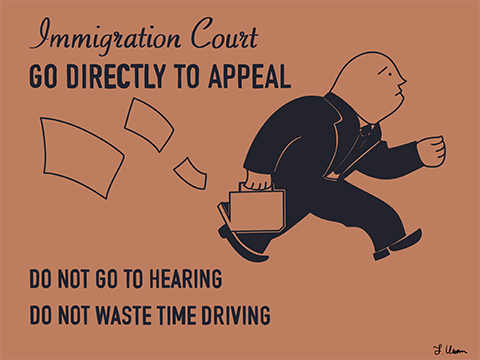
It helps to have a lawyer in court, no question. But in immigration court, where the vast majority of individuals are self-representing and not enough immigration lawyers exist to represent them all anyway, is there a point in asylum proceedings where an attorney could be most effective at supporting due process for clients? That is the main question driving an Access to Justice Lab study we’re currently pursuing. This week’s Proof Over Precedent episode digs into the complexity of immigration hearings in a discussion between A2J Lab researchers and field partners at Neighbors Immigration Clinic and No More a Stranger Foundation who regularly navigate the complicated terrain of immigration court.
Read the corresponding blog post.
Speakers:
- Felicia Caten-Raines, Staff Attorney, No More A Stranger Foundation
- Katie Taylor, Legal Director, Neighbors Immigration Clinic
- Renee Danser, Associate Director of Research and Strategic Partnerships, Access to Justice Lab, Harvard Law School
- D. James Greiner, Honorable S. William Green Professor of Public Law; Faculty Director, Access to Justice Lab, Harvard Law School
Resources mentioned:
- United States Citizenship and Immigration Services
- Executive Office of Immigration Review
- Article III judges
- JAGs appointed as temporary immigration judges
- Immigrant Court—Rules of Procedure
- Notice to Appear, Form I-862
- Master Calendar Hearing
- Merits Hearing
- Board of Immigration Appeals
Share feedback and relevant topics you would like the A2J Lab to discuss: [email protected]
Stay connected with the Access to Justice Lab:
Proof Over Precedent cover art by Courtney Chrystal