Financial Wellbeing

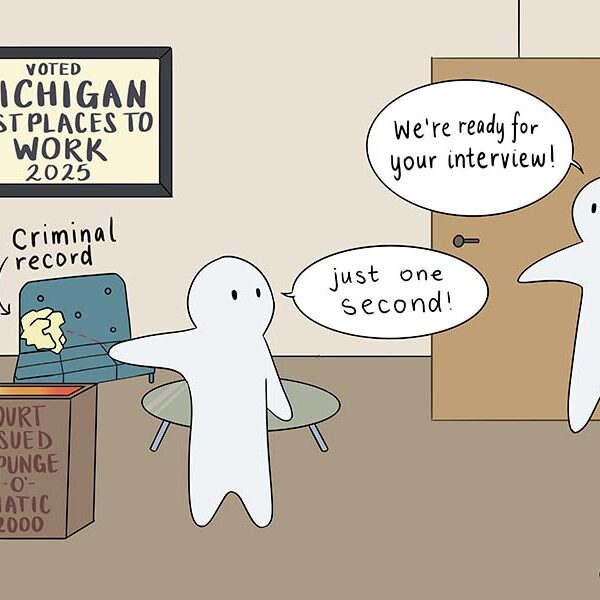
Cartoon depicting an "expungement party" with a blindfolded donkey playing "pin the expungement", showing the challenges associated with obtaining an expungement

Expungement in Michigan: Between Promise and Outcomes

A landmark study on Michigan’s expungement system found that criminal record clearing was linked to low recidivism rates, no compromise to public safety, and better outcomes for the recipients. But what does it say about the process when those promising results are not enough to entice eligible individuals?

graphic of hands with symbols of necessities

Mother Up Study Links Child Neglect, Poverty, and Guaranteed Income

The Access to Justice Lab published a newly released study of Washington, D.C. mothers involved in Child Protective Services demonstrating that government-funded child welfare programs are effective in reducing child neglect cases by prioritizing economic support to overcome conditions caused by poverty.

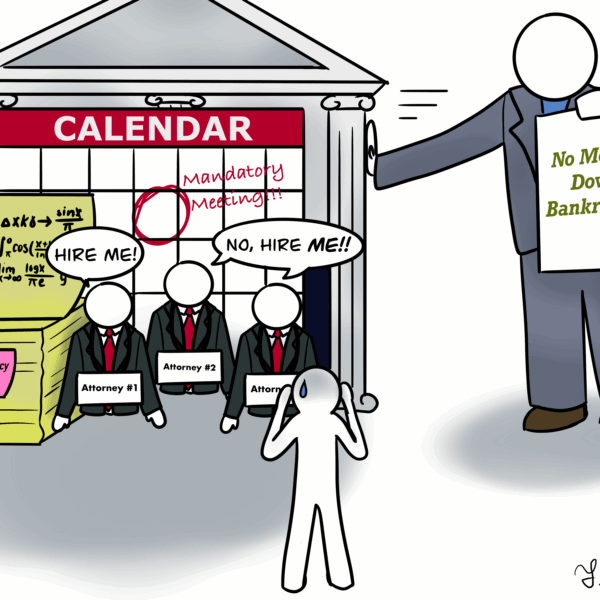
Cartoon depicting the confusion and difficulties of filing for no-money-down bankruptcy

What To Do About “No Money Down” Bankruptcies

In the second part of the “Student Voices” series on “no money down” bankruptcies, HLS student Joe Liberman picks up where he left off in the previous blog: exploring possible solutions to the problems of Chapter 13 filings, understanding their tradeoffs, and proposing how we might study them. 

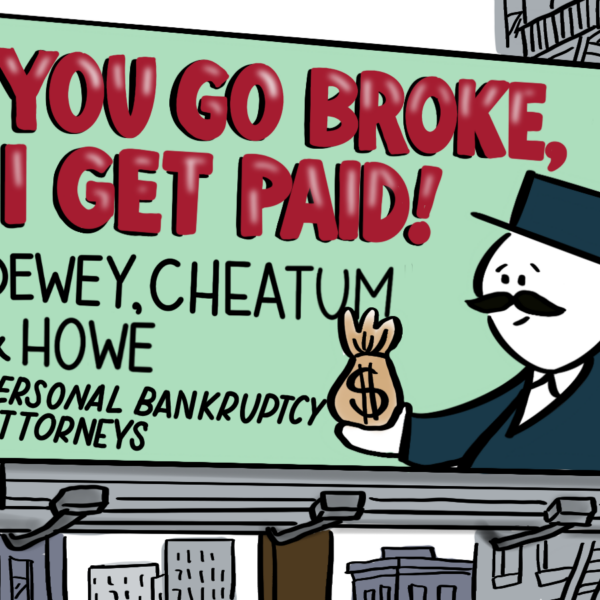
Cartoon depicting how "no money down" bankruptcies are hurting filers

How “No Money Down” Bankruptcies Are Hurting Filers, and What We Can Do About It

The combination of rising debt and inability to pay for legal help has allowed the proliferation of a financially fraught practice: “no money down” bankruptcies. While purporting to help the low income client, these bankruptcies often leave the filer in a worse financial situation because they were ill-suited for Chapter 13 bankruptcy. This post explores the rise of “no money down” bankruptcies and how we can address this access to justice issue.

Cartoon depicting a lawyer shown as a wolf evicting the Statue of Liberty and replacing her with Uncle Sam

Who Deserves a Lawyer? The Hidden Gender Bias in the Right to Counsel

The landmark court decision in Gideon v. Wainwright from 1963 made it a constitutional right, both in federal and state courts, for criminal defendants to have the right to counsel. That decision does not extend to civil cases– such as child custody, eviction, and domestic violences cases–which affect women, often from marginalized backgrounds, more than than men. HLS student Laura Aquino argues for a study to address the gender bias in denying legal assistance to civil litigants that may play a role in preserving a system that limits access to justice for women.

Cartoon reflecting whether legal services can help families avoid child welfare involvement

A2J Lab Study in the Field: Could Holistic Legal Services Help Families Avoid the Child Welfare System?

Conducting randomized control trials in the law can be a decade-long (or longer) process. Our “Child Welfare” project evaluates whether families with children who face poverty-related legal and social challenges can avoid unnecessary entries into the child welfare system with the assistance of holistic legal services – a combination of social worker services and a traditional attorney-client relationship. The study is five years in the making and still just half-way through completion, but we’re sharing its origin and process anyway.

Scroll to Top